
Tesla Powerwall 3: features and tests before making a choice
Powerwall 3 integrates storage and photovoltaic inverter into a single system. To understand whether it is suitable for your home, you need to start with your consumption, existing system and goals: more self-consumption, energy management or backup. The battery capacity and available power describe different aspects and do not guarantee autonomy on their own.
Published on April 17, 2026
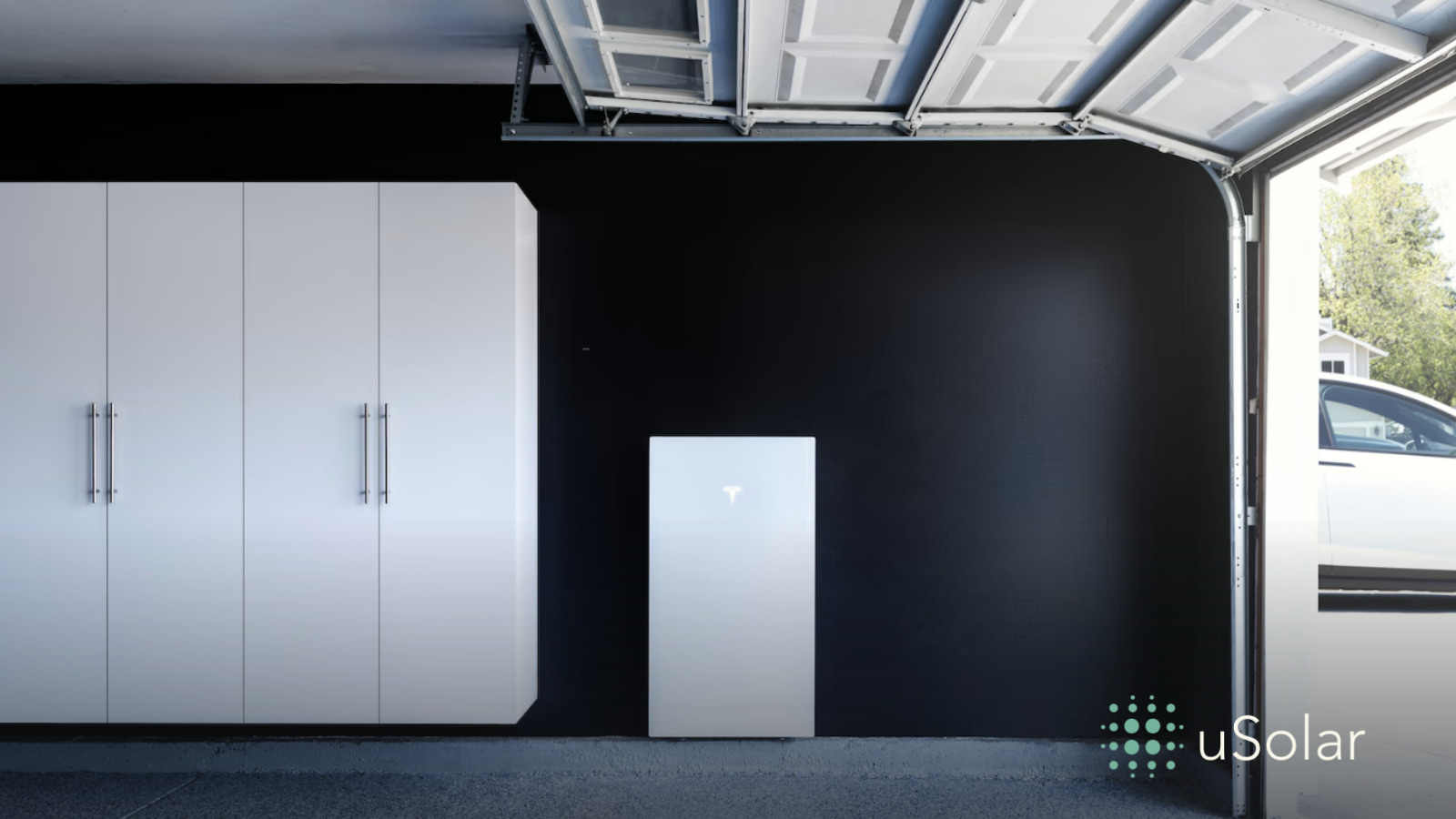
Three points to keep in mind
01
For Italy: 13.5 kWh and up to 11.04 kW according to local conditions.
02
Powerwall 3 does not add to a Powerwall 2 system.
03
Gateway, circuits and limits for backup must be clear in the offer.
01 / In Depth
Italian data that must be read correctly
Tesla indicates an energy capacity of 13.5 kWh for the Powerwall 3 and a power output of up to 11.04 kW, depending on local conditions. “Up to” is an important condition: the project must confirm the usable value in the specific installation. Data from versions intended for other markets should not be imported.
The integrated photovoltaic inverter has 3 MPPTs according to the Italian page. This can allow for a compact configuration in new installations, but it still requires the electrical verification of the strings. This does not mean that any photovoltaic field can be connected without a project.
02 / In Depth
New installation or existing photovoltaic system
In a new system, the integration of the modules with the internal inverter can be evaluated. On an existing system, Tesla indicates the possibility of pairing with the main brands of inverters; however, the actual configuration must be verified using existing data and schematics.
The comparison should show which components remain and which are modified. It is not correct to always promise fewer conversions: the energy path changes between DC and AC architectures and according to the concrete operation of the system.
Three checks before choosing Powerwall 3
Qualitative matrix of the paths: new photovoltaic system, integration of the existing system, backup. Capacity and power remain distinct.
01
New system: strings and integrated inverter
02
Existing installation: scheme and compatibility
03
Backup: Gateway, circuits and backup
03 / In-depth analysis
Powerwall 3 is not an expansion of Powerwall 2
The Tesla documentation clarifies that the Powerwall 3 can be paired with other Powerwall 3 units, but not added to a Powerwall 2 system. This limit is particularly important when considering an expansion: the generation of the existing product must be identified before placing the order.
Expansion units of the Powerwall 3 family are available. Adding energy capacity does not automatically increase the conversion power in the same proportion. The number of units, configuration, and limits must be confirmed in the technical proposal.
04 / In Depth
Backup and Gateway: what to ask
Tesla describes the Gateway as a management and monitoring component for self-consumption, time-of-use control, and backup. The offer must indicate the intended configuration and the circuits that will remain powered in the absence of the grid.
Power output, pulses, phases, charge status and reserve play a role in the result. The quick switch to backup should not be turned into a universal promise of continuity for every sensitive device. The possibility of using photovoltaic power during a blackout must also be verified on the complete system.
05 / In-depth
Self-consumption, reserve and installation space
To choose the capacity, photovoltaic surpluses and subsequent consumption must be observed over representative periods. A portion of the energy can be reserved for emergencies; that portion must not be counted as always available for evening use.
The placement requires verification of support, dimensions, accessibility, and environmental conditions. The installation is not decided solely based on the free space on the wall. Product documentation, protections, and site-specific requirements must be respected.
06 / In Depth
Warranty and cost comparison
Tesla indicates a 10-year warranty, subject to the applicable document and its conditions. Duration, residual capacity, permitted use, and connection or update obligations should be read in the text related to the product and the country, not reduced to a slogan.
The economic comparison must include battery, Gateway, and other necessary components, works, configuration, and practices. The benefit depends on the energy actually used, losses, and conditions of purchase and sale. There is no valid payback time for all families: the choice is convincing when the proposal shows how it meets your consumption and goals.
The most frequently asked questions
No. Tesla excludes this pairing. An expansion must be verified based on the generation of the existing system.
Not always. Tesla plans to integrate with existing systems; the scheme and compatibility of the actual solution need to be verified.
No. The autonomy depends on available energy, loads, reserve, and operating conditions; the required power also needs to be verified.

 Italiano
 English (UK)
 Español
 Deutsch (Sie)
