Protecting spaces, renovating the roof, preparing new possibilities. Industrial roofing and asbestos remediation, with a vision that brings together building, activity and energy.
A critical issue to be resolved or a project to be built: choose the starting point and delve into the verification processes, solutions, and intervention method.
01 · Protect and renew
Industrial roofing
Leaks, deterioration, insulation that needs to be improved or a roof that needs to be renovated. The process starts by assessing the state of the building to identify the necessary repairs and coordinate them with the activities taking place within it.
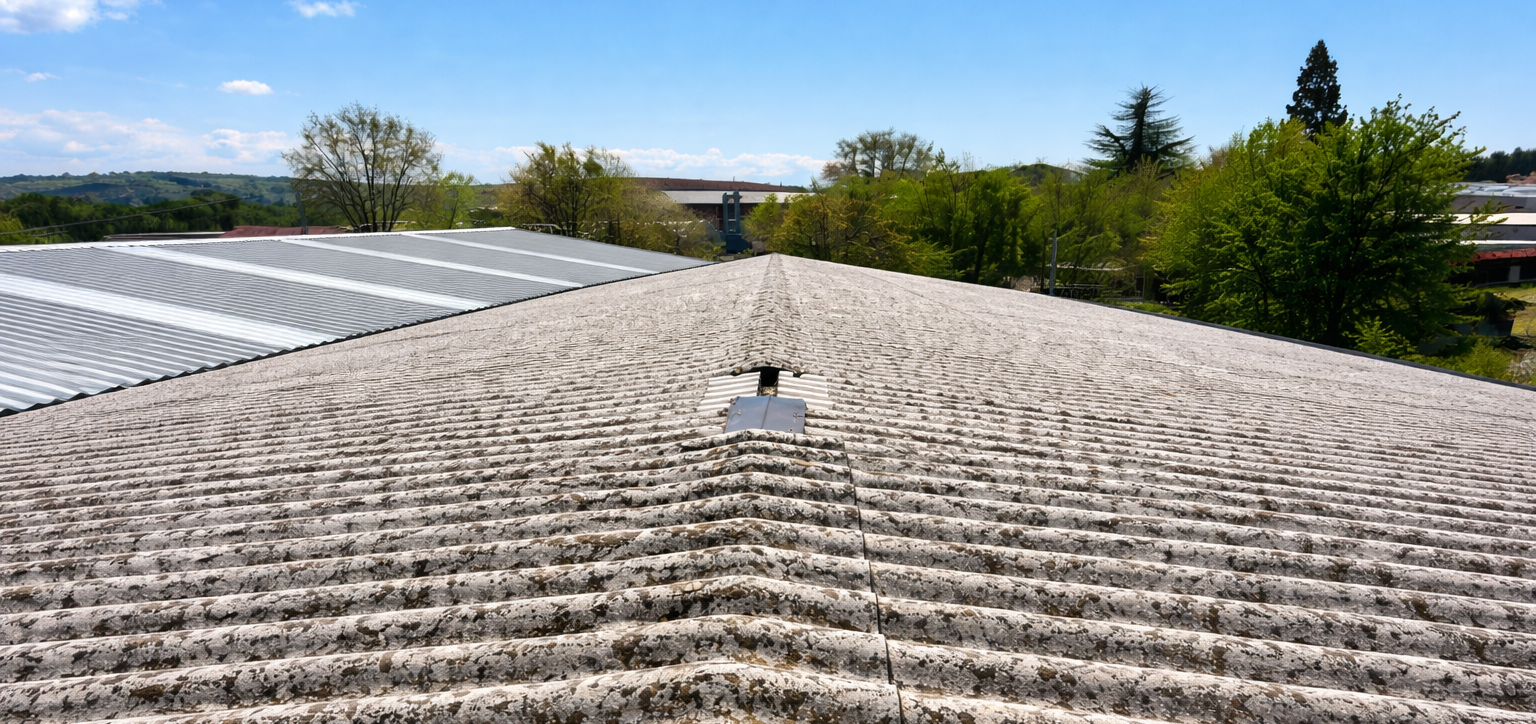
When the roof contains asbestos-cement, assessment and intervention follow a dedicated process. From the choice of remediation to waste management, with qualified parties and documentation consistent with the works.
Roofing and photovoltaics. The choices are kept together.
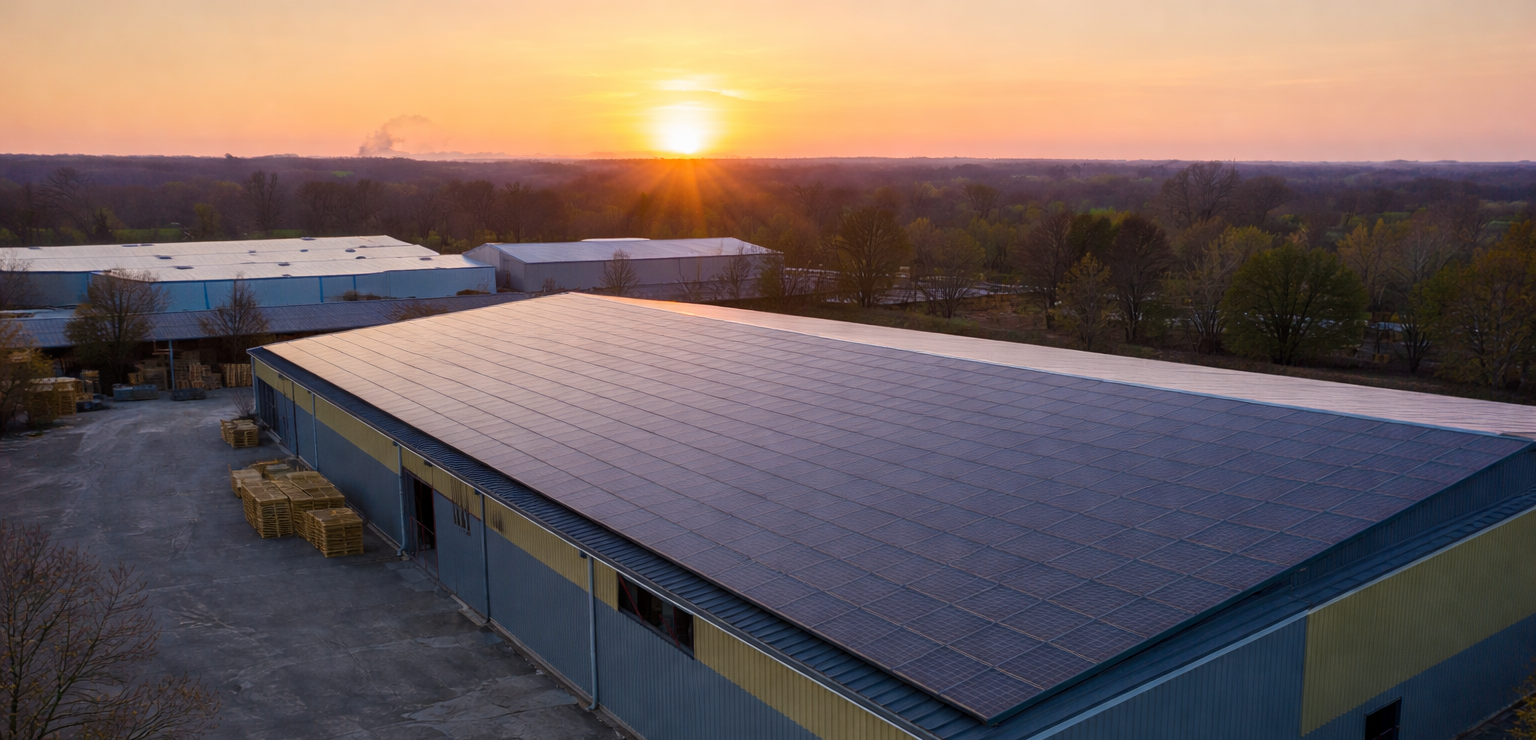
The roof protects today’s activity and can become a surface for producing energy. Before the modules come, the real conditions of the roof must be met: support, materials, waterproofing, and accessibility.
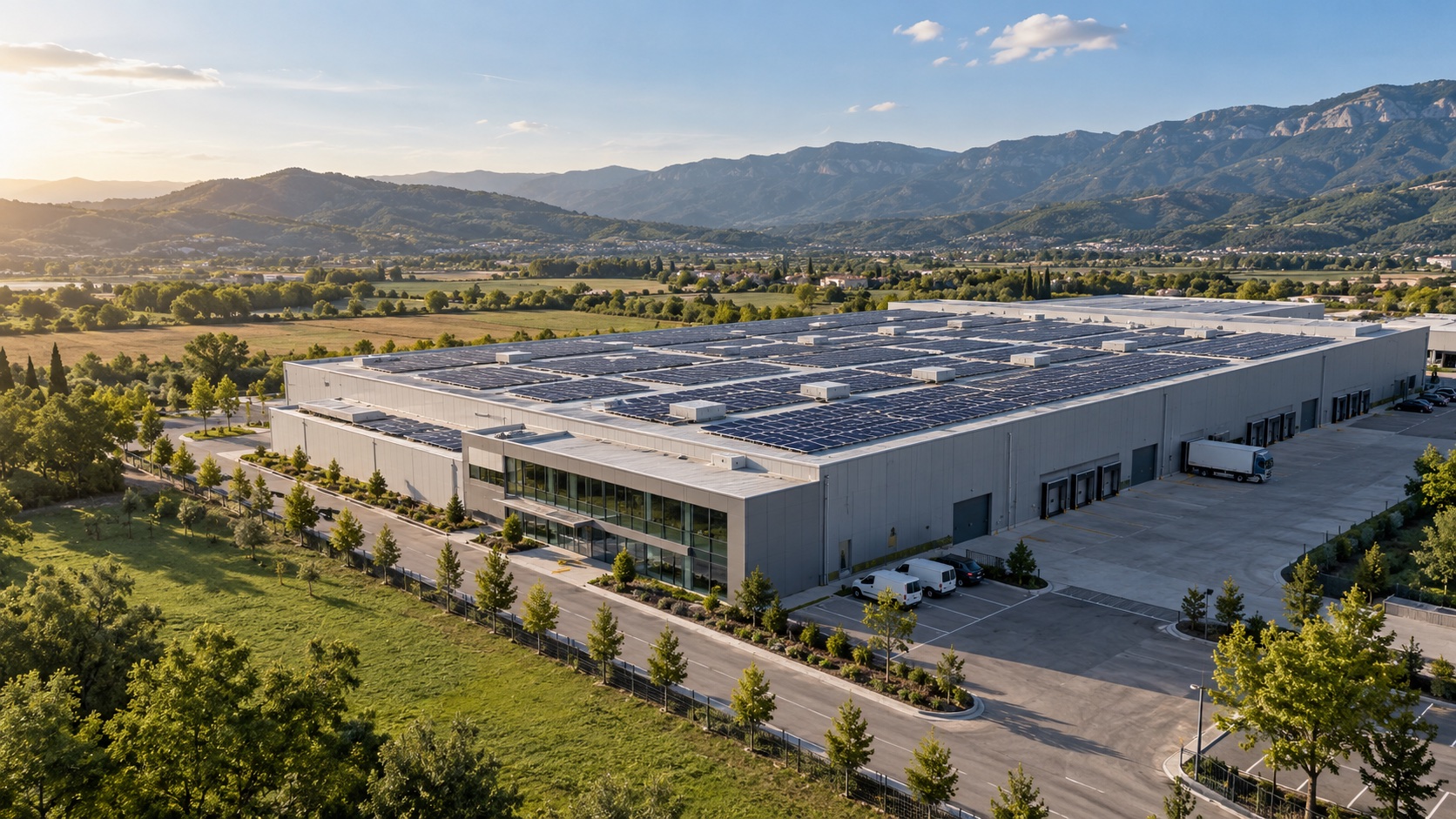
If photovoltaic energy is part of the project, we assess together the works on the roof and the system. The goal is to coordinate the decisions, avoiding treating the individual elements as if they were independent and should work together.
Feasibility and integration of photovoltaic systems.
From the first question to the project
A clear order to decide.
Each building has different conditions, constraints, and priorities. We make the path readable, from the initial information to the choices to be explored.
01
Knowing the building
We collect locations, usage, observed criticalities, and available documentation. The initial information helps identify the necessary checks, without starting from a solution already decided upon.
02
Defining the path
We focus on the works related to the roof, any presence of asbestos and the energy objectives. Repair, renovation and remediation respond to different conditions.
03
Coordinate the project
The works are evaluated in conjunction with the access points, people, and underlying activities. Phases, interferences, and possible suspensions are defined based on the specific case, along with subsequent works.
Before you start
The questions that guide the choice.
A first step to understand which path to follow for your building.
If the problem concerns watertightness, degradation, or insulation, start with the industrial roofing. If the presence of asbestos is known or suspected, report it from the first contact: inspections and a dedicated process are necessary. The shape of a sheet alone does not identify its composition.
No. The state of support, the distribution of problems, and the compatibility of materials guide the choice between local repairs, partial renovations, or replacements. The presence of asbestos also requires a specific evaluation, not an automatic conclusion based on a snapshot.
Yes, when the conditions of the building allow it. Coordinating the roofing and the installation allows to evaluate the structure, materials, fixing, sealing and access in the same project. The technical verifications and the applicable requirements remain necessary.
Location, building use, indicative dimensions, observed issues and any photographs already available. Drawings, roofing documentation and information about the photovoltaic system help with the discussion. It is not necessary to climb on the roof or handle suspicious materials to collect this information.
What needs to improve about your roof?
Tell us about the building, the issues you observe, and what you want to achieve. We’ll start with this information to identify the areas that need further investigation.
Contains information related to marketing campaigns of the user. This is shared with Google AdWords / Google Ads when the Google Ads and Google Analytics accounts are linked together.
90 days
__utma
ID used to identify users and sessions
2 years since last activity
__utmt
Used to monitor the number of Google Analytics server requests
10 minutes
__utmb
Used to distinguish new sessions and visits. This cookie is set when the GA.js JavaScript library is loaded and there is no existing __utmb cookie. The cookie is updated every time data is sent to the Google Analytics server.
30 minutes after last activity
__utmc
Used only with old Urchin versions of Google Analytics and not with GA.js. Was used to distinguish between new sessions and visits at the end of a session.
End of session (browser)
__utmz
Contains information about the traffic source or campaign that directed a user to the website. The cookie is set when the GA.js JavaScript is loaded and updated when data is sent to the Google Analytics server.
6 months since last activity
__utmv
Contains custom information set by the website developer via the _setCustomVar method in Google Analytics. This cookie is updated every time new data is sent to the Google Analytics server.
2 years since last activity
__utmx
Used to determine whether a user is included in an A/B or Multivariate test.
18 months
_ga
Identification used to identify users
2 years
gale
Used by Google Analytics to determine which links on a page are being clicked
30 seconds
_ga_
Identification used to identify users
2 years
_gid
ID used to identify users for 24 hours following their last activity
24 hours
_gat
Used to monitor the number of Google Analytics server requests when using Google Tag Manager

 Italiano
 English (UK)
 Español
 Deutsch (Sie)