
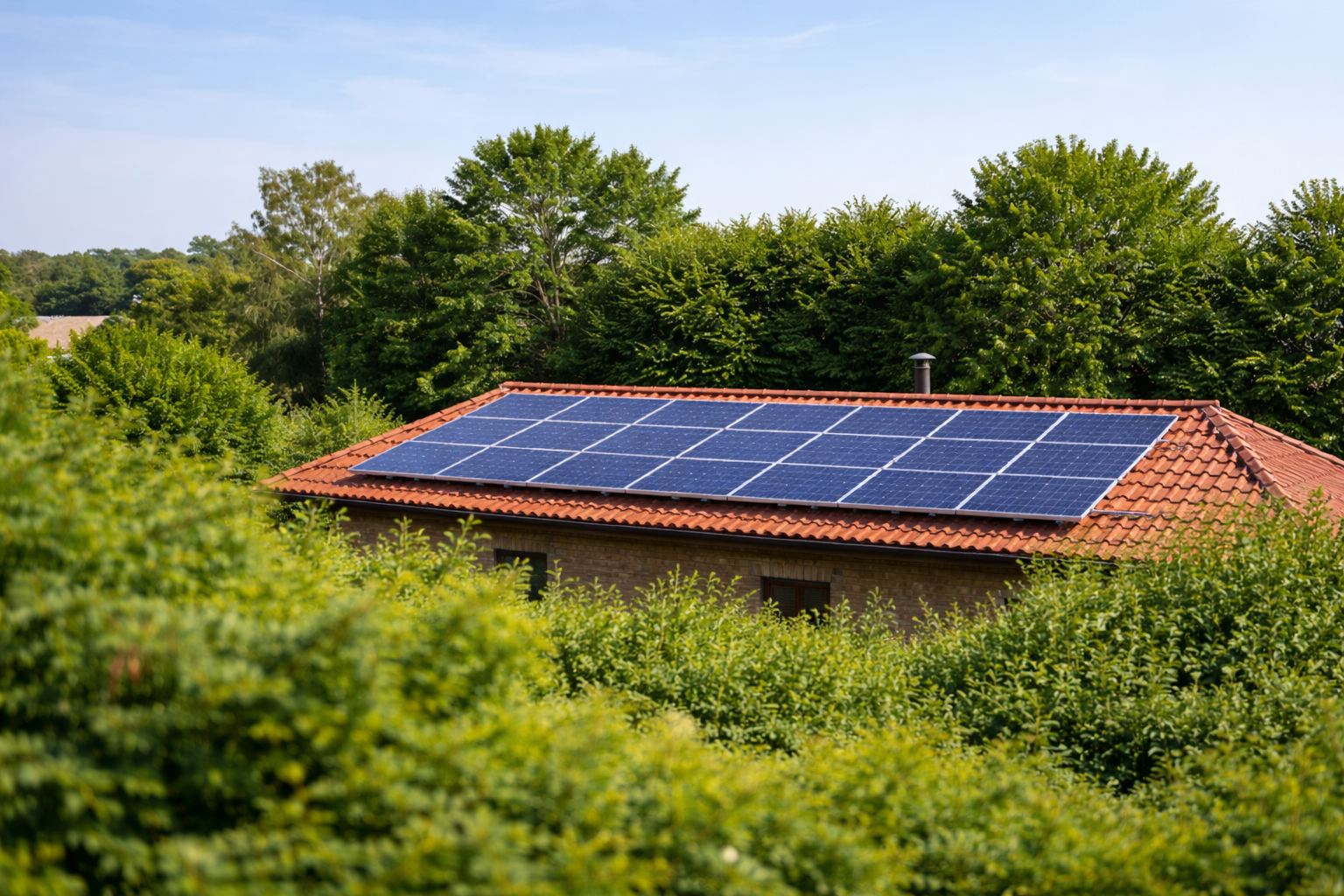
SOLAR POWER ON THE ROOF FOR HOMES AND APARTMENTS
Your roof.
Energy for your life.
We design and install photovoltaic systems on roofs for homes and condominiums. We start by understanding how you use energy and the characteristics of the building, to build a solution that makes sense every day.
FIRST THE HOUSE, THEN THE PANELS
The right size comes from two questions.
01 / THE SPACE
How is your roof made?
Exposure, shadows, available space and the condition of the covering determine the possibilities of the project. Structure and fixing elements, cable routes and access points for working and carrying out maintenance also play a role.
02 / THE HABITS
When do you consume energy?
Smart working, cooking, air conditioning and car charging change the profile of the home. We read about consumption and schedules, considering the existing appliances and those that you plan to add.
More panels do not automatically mean a better choice. We compare expected production, directly usable energy and the share that could be fed into the grid. The estimate changes with location, season, orientation and the plant’s losses.
THE SUN, WITHIN THE DAY
Producing is the beginning. Using it well is the project.
While the sun produces
Photovoltaic energy can power the household's current consumption. Programming certain uses during the sunny hours can increase the share of energy used directly.
When you get home
A battery can transfer some of the energy to the evening, if there is sufficient excess during the day. It is evaluated based on the data: it is not a necessary accessory in every system.
When needs change
Heat pumps, induction and electric cars come into the initial evaluation. Spaces and compatibility for future expansions must be verified: not every system expands in the same way.
A SYSTEM THAT RESPECTS THE BUILDING
The roof remains the roof of the house.
Before laying, we check the condition of the pavement and the characteristics of the structure. The fixing system must be suitable for the covering; the passage, water resistance and maintenance must remain part of the project.
If roof work is already planned, it is advisable to coordinate it with the installation. This allows for a joint assessment of the sequence of interventions, access points, and possible interference, before defining the proposal.
And in the condominium?
Let’s start with the users the system will serve. The photovoltaic system connected to common consumption can power shared services; it does not automatically reduce the bills of individual apartments. Configuration, space availability, and the decision-making process are clarified with the owners and the administrator.
ONE DAY, FROM CLOSE UP
The same sun.
A different use of energy.
Imagine a house that produces 12 kWh in a day and consumes 12 kWh. Without a battery, the timing makes a difference: part of the consumption can occur when the photovoltaic system is producing electricity.
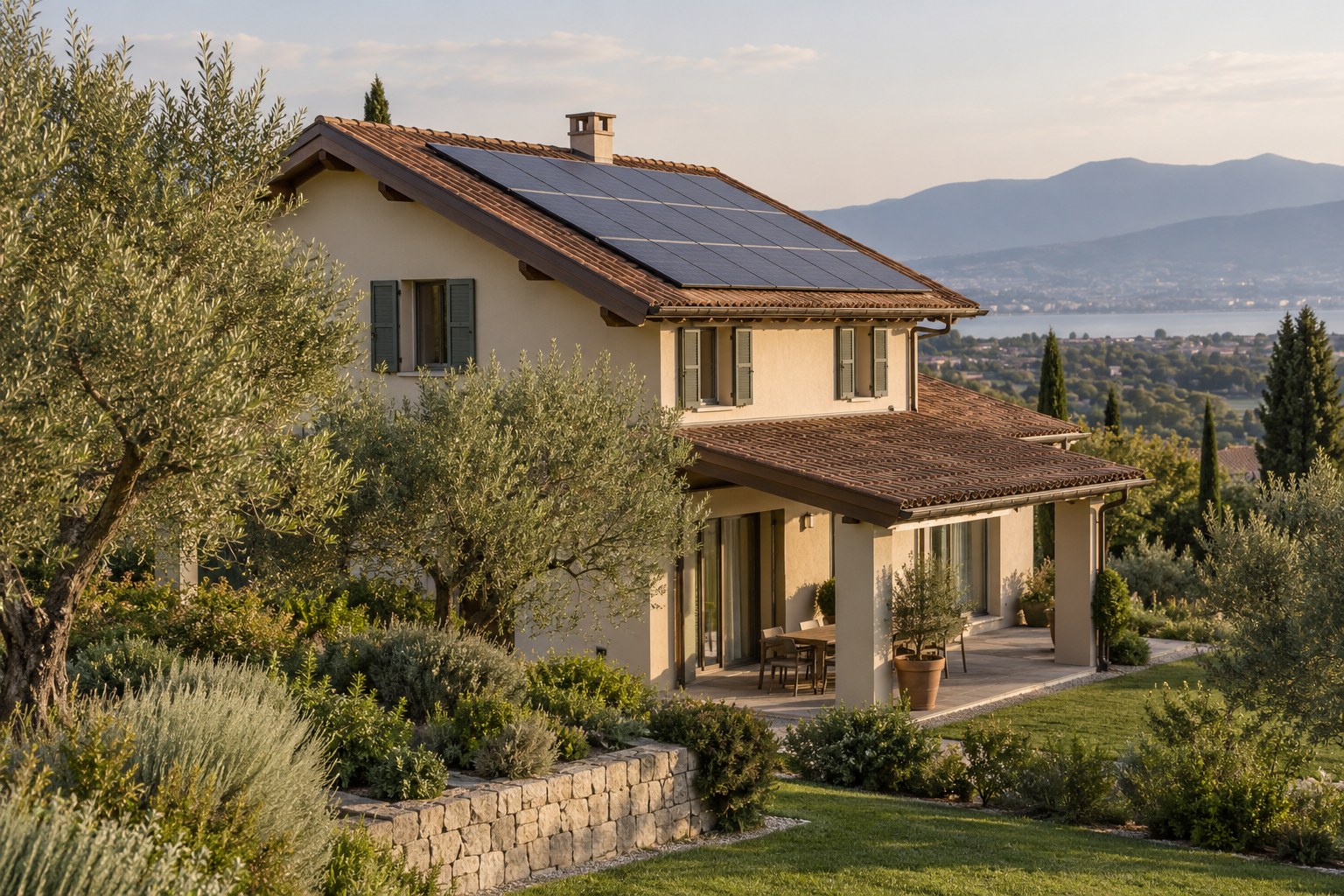
CALCULATION SCENARIO · 01
Move on from one use, don't give up on it.
In the example, 2 kWh of flexible usage shift from the evening to the hours when there is at least 2 kWh of excess solar energy. The demand remains the same; the energy used directly increases.
SAME SCENARIO · 02
Every kWh has a purpose.
After the shift, 8 kWh reach directly the consumption and 4 kWh are added. At other times the house draws 4 kWh: daily production and consumption are equal but this does not mean self-sufficiency at all times.
Educational figures for a single day, not data from a plant or an estimate of savings. The shift requires programmable usage and production available within the same timeframe. Seasons, shadows, and habits change the actual balance.
From possibilities to concrete project.
FROM THE INITIAL CONVERSATION TO THE INSTALLATION
A reference, clear passages.
1. We collect the data
Bills, address, photos of the roof, habits and expected developments. The initial comparison serves to identify the necessary checks, not to choose a standard size.
2. Define the solution
Site inspection and design lead to a proposal with estimated components, processes, production, and economic assumptions that are readable. We verify any requirements for the applicable subsidies.
3. We design and connect
We coordinate the installation and relevant practices of energy connection and management. Activities included, times and conditions are indicated in the proposal.
4. We verify and deliver
Checks, documentation and explanation of the monitoring complete the process. Subsequent maintenance and assistance are defined according to the system and the agreed service.
Do you want to prepare for your first confrontation? Read From what information does a photovoltaic quote come about.
FREQUENTLY ASKED QUESTIONS
The answers, before the choice.
Should my roof face south?
Not necessarily. Orientation, inclination and shadows are evaluated together. Even different slopes can contribute to the project; the planned production must be compared with consumption and with the space actually usable.
How many panels do I need for my home?
The decision is not based on the number of people or just the annual bill. Consumption, hours, roof characteristics and new expected loads are necessary. In the estimate, we distinguish between installed power, expressed in kWp, and expected energy, expressed in kWh.
Do I also need to install a battery?
No. We assess how much energy would remain available after daytime consumption and how much would be needed later. It may be more useful to intervene earlier on habits, sizing, or other needs of the home.
Does the photovoltaic system work when there is no electricity?
A normal system connected to the network does not guarantee power supply in the event of a blackout. To serve pre-configured circuits, a compatible backup configuration is required, with separation from the network, protections, and load verification.
Can I install it on a condominium roof?
The possibility is evaluated on a case-by-case basis, clarifying which user group will be served, available space, and the characteristics of the building. The project must be coordinated with administrative aspects and with the other requirements of the roofing.
What should I bring to the first date?
Recent bills are useful, along with an address and photos, as well as information about the roof and electrical system. It also indicates any planned work, such as a heat pump or electric car: these may change initial choices.
THE PROJECT CAN CONTINUE
One house, more possibilities.
LET'S TALK ABOUT YOUR HOUSE
Let's start with the roof.
And from your day.
Tell us where the house is located, how you use energy and what changes you plan to make. We will build the first comparison based on useful information.
 Italiano
 English (UK)
 Español
 Deutsch (Sie)
