
Suitable areas and photovoltaic permits: how to verify a site
An unused roof or an available plot of land does not yet constitute a project that can be authorised. Before considering financial returns, it is necessary to understand where work can take place, in what configuration and under which procedure. Designation as a suitable area can affect this process, but it does not replace all planning, landscape, environmental and grid-connection checks.
Published on 27 March 2026
Three points to keep in mind
01
The current rules on suitable areas must be read in the updated Italian Legislative Decree 190/2024.
02
Suitability, authorisation and grid connection are related but separate checks.
03
Agricultural land and associated works require a specific assessment.
01 / In Depth
The regulatory framework has changed
The national reference is now Italian Legislative Decree 190/2024 on administrative procedures for renewable energy, in its current version. The rules on suitable areas have been incorporated into Articles 11-bis and following through Decree-Law 175/2025, converted into Law 4/2026. A guide that cites only Article 20 of Legislative Decree 199/2021 as the current rules no longer describes the general framework accurately.
This does not make previous legislation irrelevant to every application. Transitional provisions apply to proceedings already under way, as also clarified by the Italian Ministry of Culture. Assessment must therefore start with the project and its administrative status, not simply the date on which the owner decides to request information.
02 / In Depth
Suitability and permission to build are different matters
“Suitable area” does not mean “no permits required”. The designation concerns criteria and simplifications provided for by the rules; the procedure for an individual project also depends on the system's characteristics, location and associated works. Assessment must distinguish the area's classification, the applicable procedure and any other approvals required.
Legislative Decree 190/2024 sets out routes based on permit-free activities, a simplified authorisation procedure (PAS) and a single authorisation, with specific annexes and conditions. It is not accurate to assign a procedure using a generic label such as “small”, “medium” or “large”: the parameters and characteristics defined by current legislation are what matter.
Four checks on the same site
Four connected areas of assessment: site availability and planning, constraints and site classification, the project procedure, and grid connection. No automatic approval ticks or map implying that areas are authorised.
01
Site availability and planning
02
Constraints and site classification
03
Applicable procedure
04
Grid connection and associated works
03 / In-depth analysis
An industrial building requires more than a surface-area check
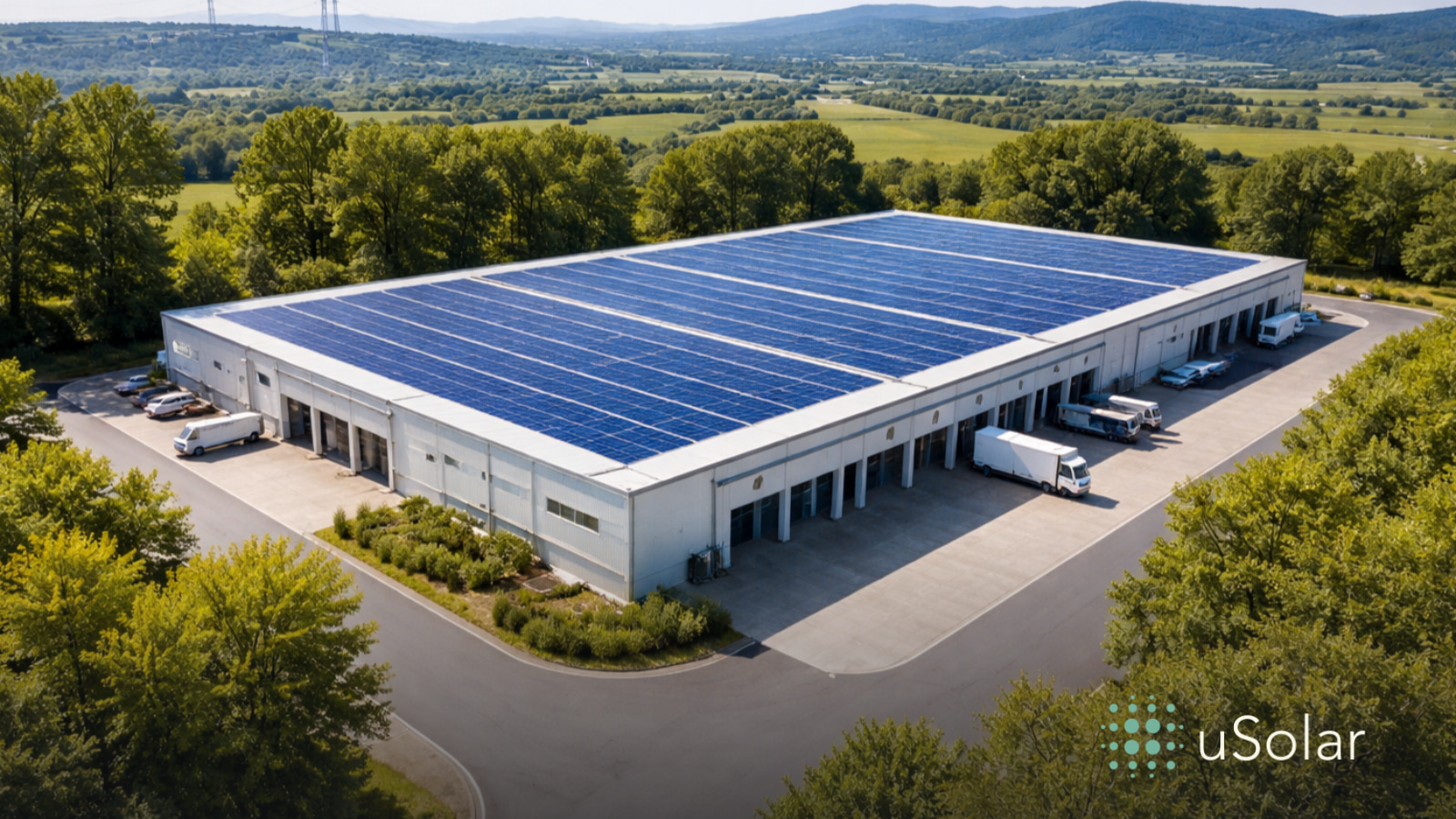
For a roof, checks must cover legal availability, the building's authorisation status, structure, geometry and any constraints. Technical considerations include load-bearing capacity, watertightness, remaining roof life, access and possible interference with skylights or existing systems. Where the business is subject to fire-prevention requirements, the photovoltaic system must also be coordinated with that assessment.
The electrical connection route can involve rooms, substations and works beyond the roof. A favourable assessment of the roof therefore does not automatically cover all the works needed to connect the system. Identifying them early makes it possible to assess a feasible solution rather than a theoretical layout of the modules alone.
04 / In Depth
Agricultural land is not automatically available for photovoltaics
The rules include specific limits on photovoltaics with ground-mounted modules in agricultural areas, together with conditions and exceptions that must be checked. Simply calling a system “agrivoltaic” does not remove every constraint: its configuration and the continuation of farming activities must be assessed in practice under the relevant framework.
Industrial areas, quarries, landfills and previously developed sites also require an assessment of their actual conditions. The cadastral category alone does not fully establish planning designation, constraints or site availability. A specific document review is useful before buying or committing land for energy purposes.
05 / In-depth
Grid connection must be considered from the outset
Feasibility also depends on the grid and the works required for connection. Apparent proximity to a power line and available capacity are not the same thing. The connection solution can affect costs, timescales, routes and rights over the land involved.
Authorisation checks, electrical studies and system sizing should be coordinated. An operational start date cannot be promised simply because the site falls into a favourable category: requests for additional information, grid works and the circumstances of the individual case can affect the schedule.
06 / In Depth
The documents needed for an initial decision
Gather cadastral references, plans, documents establishing availability of the site, a description of the proposed works and information on existing uses. For a business, add consumption data, connection-point details and plans for the business's development. The initial assessment should explain opportunities, constraints and outstanding checks clearly.
uSolar can start with the site and energy demand to develop a system proposal. The aim is not to declare a location “suitable” on the basis of a photograph, but to define a verifiable technical and administrative process before significant financial commitments are made.
The most frequently asked questions
No. The applicable procedure and the approvals or checks required by the project and its location still need to be identified.
No. Power is one factor; the type, location, works and conditions in the regulatory annexes must also be considered.
Not necessarily. Transitional provisions distinguish ongoing proceedings: the dates and documented status of the application must be checked.

 Italiano
 English (UK)
 Español
 Deutsch (Sie)
