
SolarEdge Home Hub: how to design the energy of the home
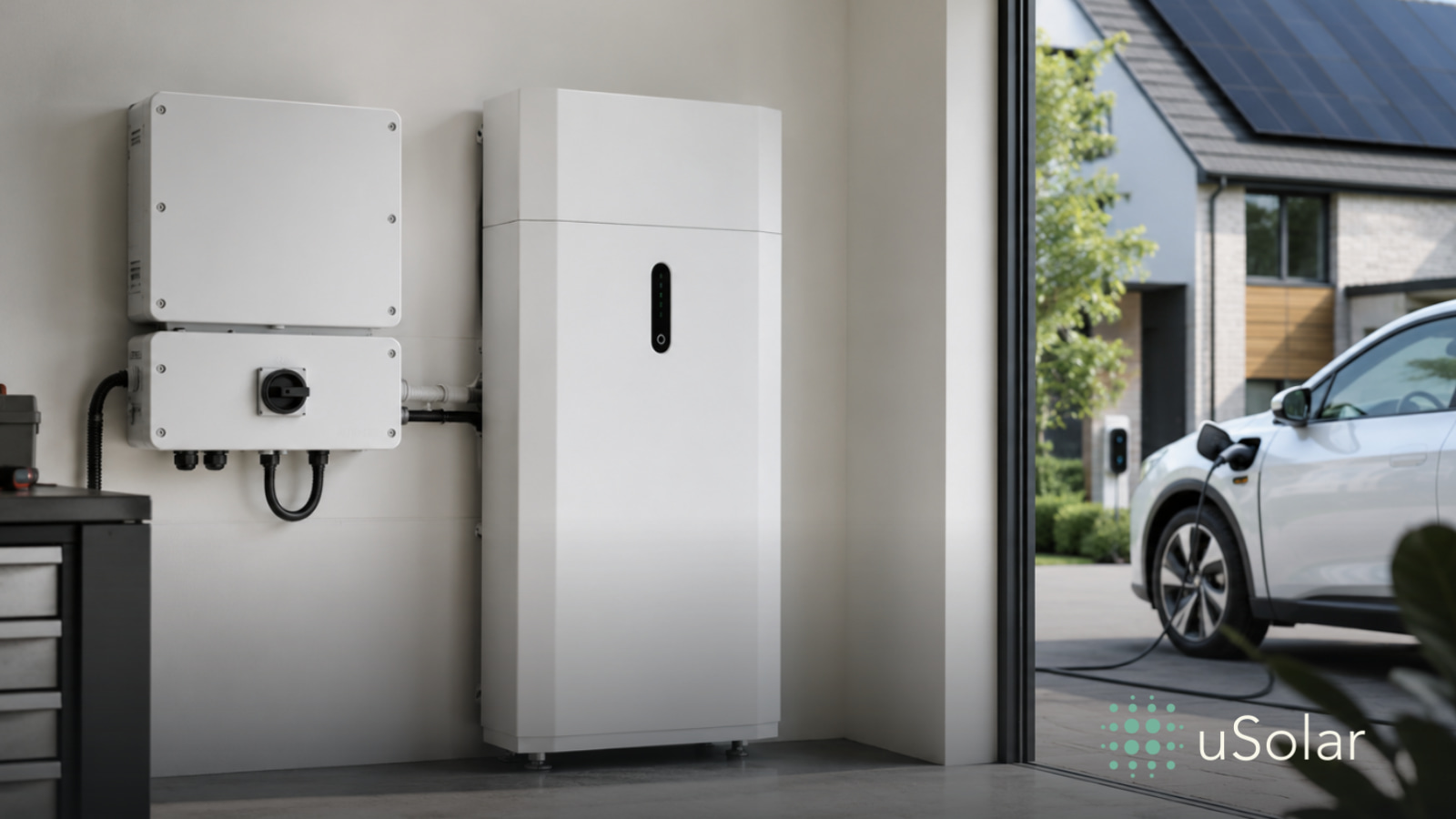
SolarEdge Home Hub is a family of residential inverters designed to integrate photovoltaic production, energy storage, and energy management. The point is not to have all the possible functions, but to choose those that are useful for the home and the components necessary to make them operational. A setup does not equate to a function already installed.
Published on June 2, 2026
Three points to keep in mind
01
Home Hub identifies a family: the exact configuration is needed.
02
Compatible measures and devices make the management functions operational.
03
The battery and backup interface must be explicitly mentioned in the offer.
01 / In Depth
One platform, several configurations
The range includes single-phase and three-phase solutions. In the SolarEdge architecture, the inverter works with compatible optimizers and, when provided, battery, meters, and management devices. The name Home Hub alone does not identify power, usable battery, or backup capabilities.
The Italian compatibility guide distinguishes codes and combinations. Before comparing offers, it is advisable to request a breakdown of the components and a schematic diagram: two proposals with the same trade name may include different functions and work.
02 / In Depth
First, make good use of the production
Solar energy can directly power existing consumption. The excess energy can be fed into the grid or stored if the project includes a battery. The choice of priorities must take into account habits and the actual energy profile.
Moving part of consumption to the sunny hours, when feasible, can also be useful without increasing the storage capacity. The software helps manage the system but does not change the amount of available sunlight and does not guarantee independence from the grid in every season.
From production to the house's priorities
Qualitative management scheme: inverters, battery, compatible measurements and loads. Backup represented as a conditional function via interface and configuration.
01
Photovoltaics and optimizers
02
Home Hub
03
Measured consumption
04
Compatible battery
05
Backup: interface and planned circuits
03 / In-depth analysis
The battery is chosen together with the inverter
Compatibility means verifying the model, generation, connections, and the allowed configuration. It is not enough to buy a battery of the same brand. The usable capacity and the charging and discharging power must correspond to the excess and subsequent consumption.
A reserve intended for backup reduces the energy used in ordinary self-consumption. If an expansion is planned, the project must indicate the limits of the expansion, any updates, and the conditions that may require a new review.
04 / In Depth
Backup: the content of the offer must be explicit
SolarEdge indicates that backup applications require compatible SolarEdge Home batteries and an interface, in addition to compliance with local conditions. Circuit diagrams, phases, available power, and behavior during the interruption and return of the network must be defined.
It is not possible to promise continuous operation without interruption based solely on the Hub brand or name. Sensitive loads, pumps and compressors require time and point checks. Even photovoltaic production on the island must be supported by the configuration implemented.
05 / In-depth
Useful data must be measured at the right point
Viewing production does not equate to knowing all the home’s consumption. To distinguish direct energy, battery, drawdowns, and inputs, proper measurements and configuration are needed. A clear map and the owner’s access make monitoring more useful over time.
Smart energy functions depend on the compatible devices installed. Before assuming control of a heat pump or electric charging station, it is necessary to specify which controls are available and which priorities are applied. Integration should be described in terms of concrete functions.
06 / In Depth
Safety and assistance are part of the system
The family has safety features that vary with components and configuration. Voltage reduction, anomaly detection, and monitoring do not eliminate risks nor replace proper installation and maintenance. The manufacturer's instructions apply to the actual models.
The quote should clarify setup, documents, access to the app, guarantees, and the management of alarms. To make decisions, it is useful to consider consumption, the characteristics of the roof, the family’s future plans, and the family’s overall needs. An integrated system is valuable when each function serves a recognizable need without turning future planning into a benefit already guaranteed.
The most frequently asked questions
No. The offer must separately indicate the battery and the other components provided, with their codes and capacities.
The official compatibility matrix for inverters, batteries, and configuration must be verified; the common brand is not enough.
Only if the necessary measures are present and configured. Monitoring production alone does not describe all the flows within a home.

 Italiano
 English (UK)
 Español
 Deutsch (Sie)
