
Photovoltaics and air conditioners: using summer energy better
Photovoltaics and air conditioners can operate at the same times, reducing part of the electricity bills. However, the result depends on available production, absorbed power and the building’s needs: the sun does not automatically make cooling free of charge.
Published on July 27, 2026
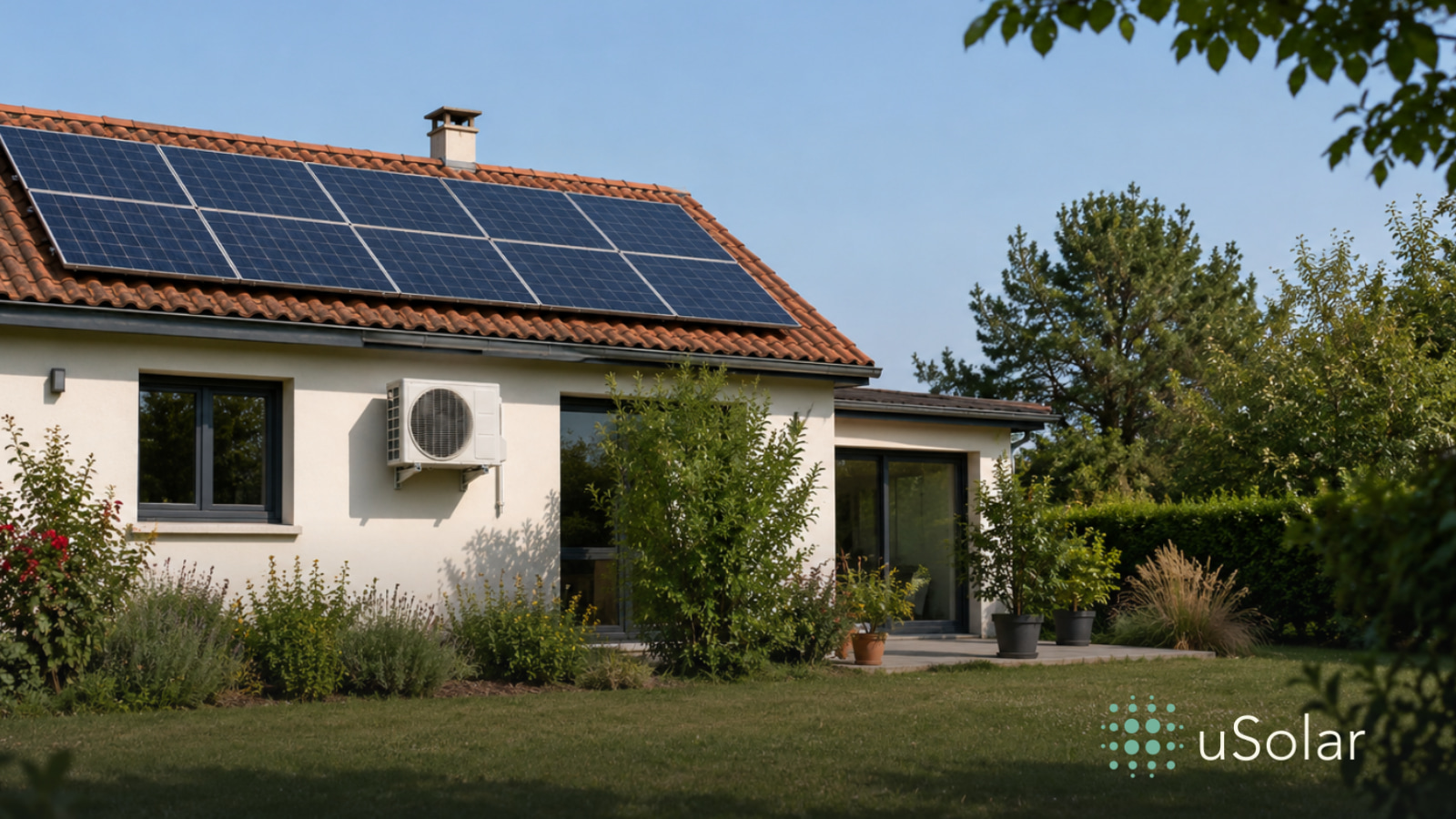
Three points to keep in mind
01
Photovoltaic reduces the electricity bill, not the thermal needs of the building.
02
Refrigeration power and electrical consumption are not the same thing.
03
Compare the flows during representative schedules and conditions.
01 / In Depth
Distinguish the consumption of the appliance from the withdrawal
Air conditioning requires energy to cool the environments. Photovoltaics can provide part of the energy, but it alone does not reduce the thermal needs of the home. Shading, regulation, and the characteristics of the enclosure, on the other hand, affect the amount of energy needed to achieve comfort.
This distinction avoids a common misconception: a lower bill does not necessarily mean that the appliance consumes less. It can mean that part of the consumption is covered by production on the roof.
02 / In Depth
It counts the real electrical absorption
The cooling capacity reported in the characteristics of the air conditioner does not correspond to the electrical power consumed. In modulating systems, the power consumption changes during operation, along with internal and external conditions and the demand for cooling.
For the project, it is useful to know the model, the environments served, the hours of use, and other current loads. The nominal data of the panels alone do not indicate how much power will remain available for the air conditioner at any time of the day.
In the comparison between devices, it is useful to keep the room dimensions and solar availability separate. A air conditioner chosen solely to absorb the surplus may not be suitable for the required comfort; the design must coordinate the two needs without confusing them.
The load remains; its feeding changes.
Hypothetical four-hour scenario: average electrical absorption 1 kW, energy required 4 kWh.
Direct photovoltaic
3 kWh
Grid
1 kWh
Only the load of the air conditioner.
Photovoltaic supply at the same time as consumption, not daily netting.
03 / In-depth analysis
An example that does not promise savings
Suppose that over four hours the air conditioner draws an average of 1 kW: the energy required is 4 kWh. If the photovoltaic system directly supplies 3 kWh during the same period, the remaining contribution from the grid is 1 kWh, considering only that load.
This is a simplified example; it is not typical consumption for a model. In the real world, you have to add the other devices and read the flow over time. Abundant production in the morning does not directly cover evening use if an adequate storage system is not in place.
04 / In Depth
Comfort and programming must go hand in hand
It can be useful to schedule the operation during the hours when the building is used and the photovoltaic system is producing electricity. However, it is not a good strategy to unnecessarily cool empty rooms just to increase the self-consumption indicated by the app.
The ENEA guidelines emphasize the importance of reasonable regulation, proper air circulation, and the use of screens. The choice of settings must take into account comfort, humidity, and the needs of the occupants, avoiding comparisons based solely on a set temperature that is the same for everyone.
05 / In-depth
Check the behavior over a representative week
A practical control involves placing photovoltaic production, collection, and air conditioning usage schedules side by side. It is advisable to observe several days, because clouds, temperatures, and the presence of people can greatly change the result.
If drawdowns remain high during the solar hours, it is not automatically a failure: the demand may exceed the available production. Before adding panels or batteries, it is useful to understand whether the problem is related to schedules, simultaneous loads, the system configuration, or the efficiency of cooling.
The most frequently asked questions
At certain times it may happen that the available production covers all the current loads. This is not a guaranteed condition for the entire summer.
No. The daytime operation can already coincide with production. The energy storage is evaluated based on subsequent consumption and the available surplus.
Not as a general rule. The programming must respond to the comfort and characteristics of the building, without creating unnecessary consumption.

 Italiano
 English (UK)
 Español
 Deutsch (Sie)
