
Photovoltaic pergola: how it works and when to consider it
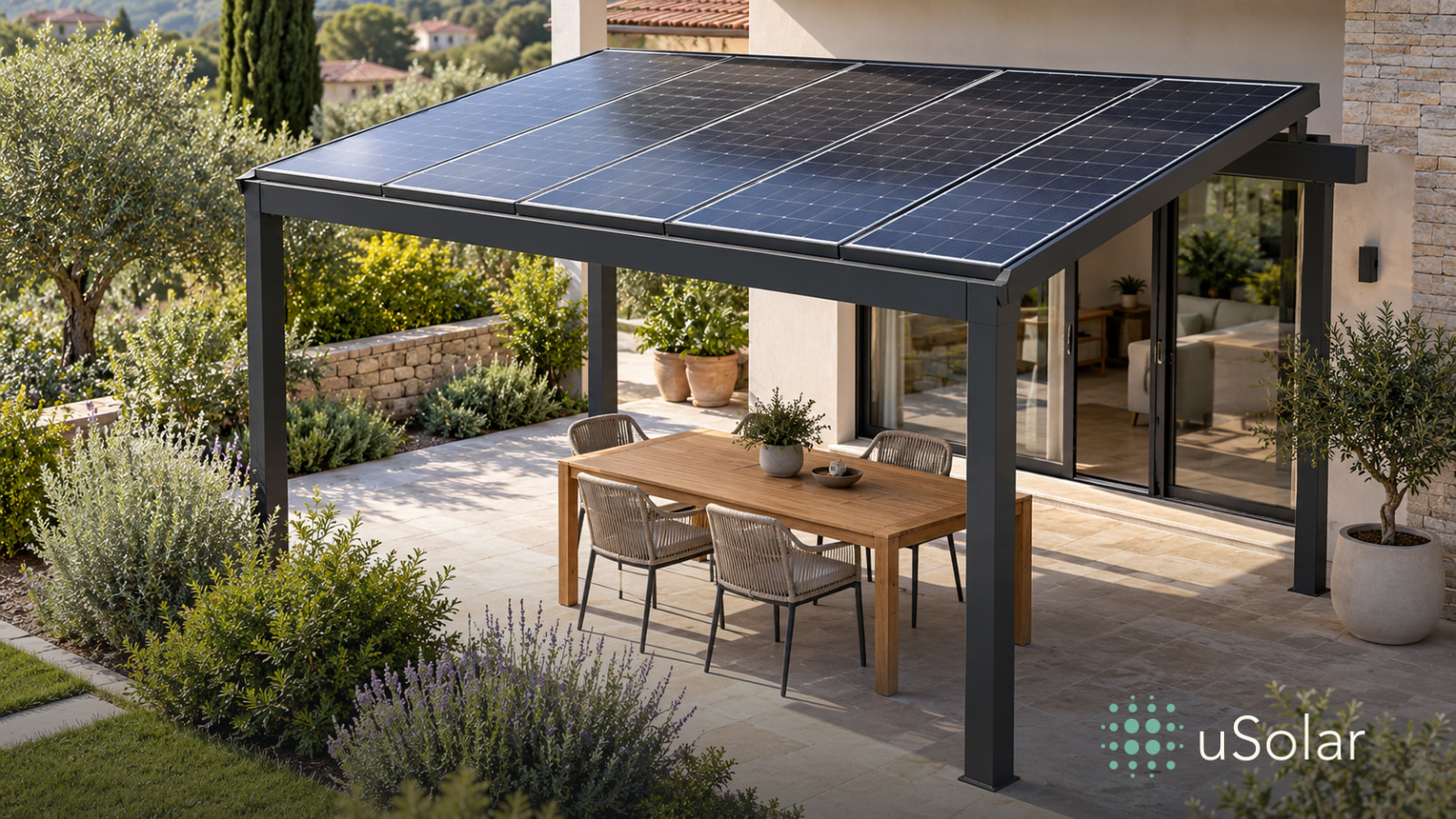
A photovoltaic pergola integrates a structure for the outdoor space with the production of electricity. It can be interesting when both functions are needed, provided that the project clarifies the use of the area, the characteristics of the cover and the expected energy contribution.
Published on March 10, 2026
Three points to keep in mind
01
Evaluate together the function of space and production.
02
Ask for performance related to the complete configuration.
03
Check the structure, electrical integration, and site constraints.
01 / In Depth
The structure comes before the photograph
Size, the position of supports, access points and connection to the building determine how the space can be used. A pleasing solution in an image may be poorly functional if it obstructs passages, views or daily activities.
It is useful to start from a floor plan and the specific needs: dining area, garden, reception area or other use. The choice of configuration should explain what is covered and what conditions remain to be verified, without relying solely on the trade name.
It is also useful to check how the relationship with the neighboring rooms will change: access, views, and natural light can be affected by the new structure. These aspects are not just influenced by photovoltaic power alone and deserve space in the comparison before making a choice.
02 / In Depth
The production follows the rules of photovoltaics
The modules convert light into electricity; the inverter and the rest of the system make the energy usable in the intended configuration. The output changes with location, orientation, tilt, and shading, just as happens with other photovoltaic surfaces.
A pergola does not produce a standard amount simply because it is installed in the garden. The estimate must refer to the actual power and installation. Trees and nearby buildings also need to be considered throughout the seasons.
From space to the solution
A route for choosing a pergola with photovoltaic function.
01
Desirable use
02
Geometry and shadows
03
Roof performance
04
Structure and connection
05
Comparison of alternatives
No surrender, authorization or automatic real estate revaluation.
03 / In-depth analysis
Covering, comfort and impermeability are not synonymous
Shading is an important function, but residual light, water management, and protection in different conditions must be clarified. Modules, connectors, and fittings are part of a complete solution, not an implied performance.
Before making a choice, it is advisable to ask about the features documented for the proposed configuration. Any accessories and closures also change the use of space and may require further consideration: they should not be added as if they were always irrelevant details.
04 / In Depth
When the comparison can be interesting
The solution deserves evaluation when there is a real need for coverage and the site offers conditions suitable for production. For a home, habits and consumption patterns count; for an activity, routes, service, and continuity in the use of the spaces also matter.
Hypothetical example: a family wants to shade a dining area and considers two covers with the same function. The comparison can isolate the cost and energy contribution of the photovoltaic version, without automatically attributing an increase in property value or a fixed economic return.
05 / In-depth
Integration and checks before the order
Structures, foundations, anchors, and electrical connections must be designed for the site. If a photovoltaic system already exists, the integration must be technically verified and documented in accordance with applicable regulations: connecting new modules to the first available equipment is not enough.
It is also necessary to clarify the urban planning path and any local constraints with the competent professional. The final decision should leave a readable outline of structure, facilities, works and accessories, so as to compare truly equivalent alternatives and choose a solution that is also useful in everyday use.
The most frequently asked questions
It must not be assumed. Characteristics of the work and site conditions must be verified in the applicable procedure.
It can be evaluated, but requires technical compatibility and the management of the relevant compliance procedures.
It depends on costs, space usage and usable production. The comparison must maintain the required functions uniformly.

 Italiano
 English (UK)
 Español
 Deutsch (Sie)
