
Energy efficiency of buildings: what the regulations actually provide
When talking about energy efficiency, associating a news story with the wrong decree can make what is not a reform of building energy performance seem mandatory. Decree-Law 42/2026 is not a reform of building energy performance: it concerns oil prices and measures for businesses. To decide how to intervene on a house or warehouse, different references and a concrete reading of the project are needed.
Published on April 14, 2026
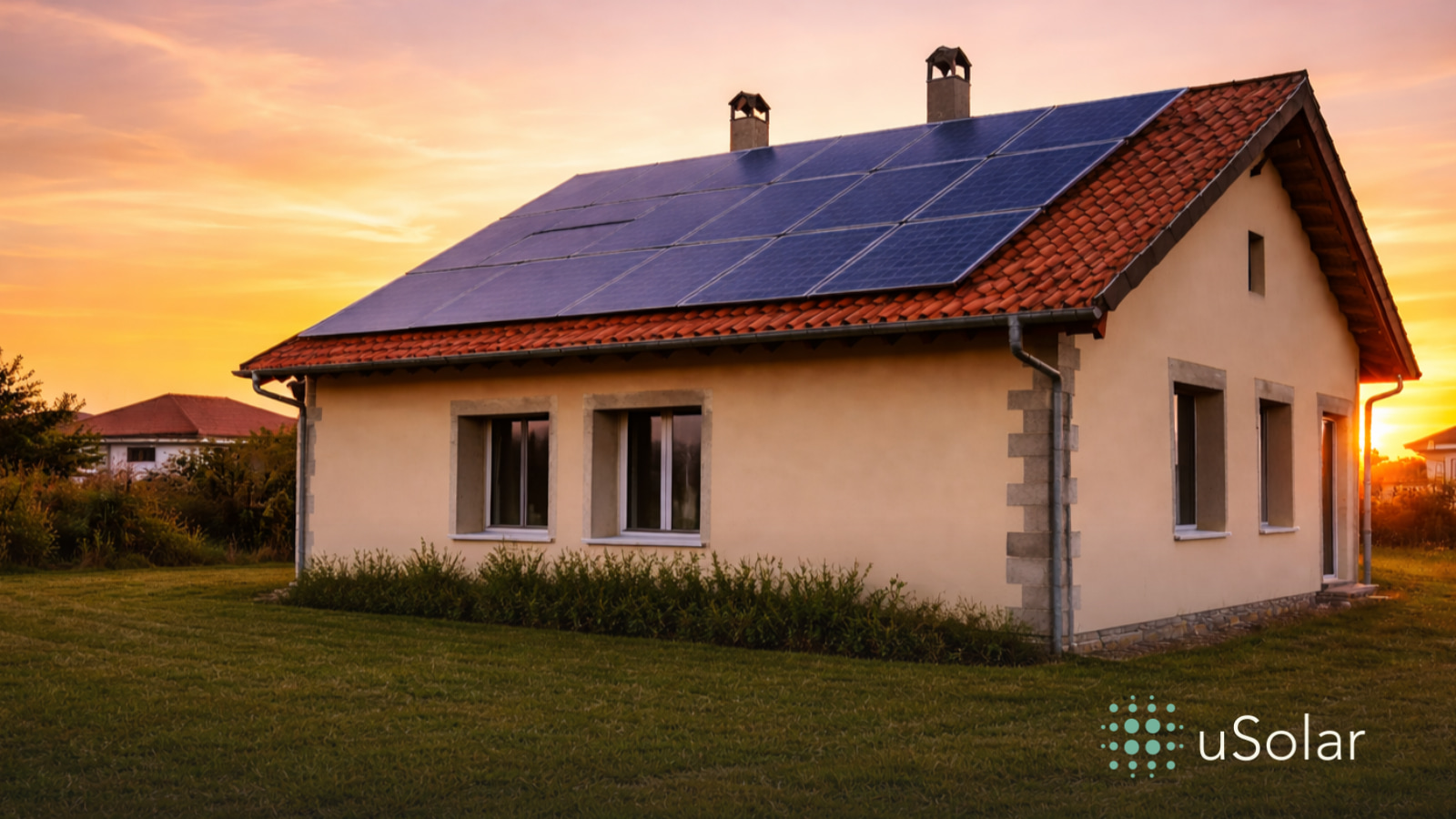
Three points to keep in mind
01
Decree-Law 42/2026 does not regulate the energy efficiency of buildings.
02
European objectives and individual property obligations must be distinguished.
03
Reducing needs and self-production are complementary strategies.
01 / In Depth
Clarify the reference to D.L. 42/2026
The decree-law of 3 April 2026, no. 42, had as its objective urgent measures regarding petroleum prices linked to international crises and support for businesses. It was subsequently repealed by law no. 88 of 22 May 2026, which preserved the effects already produced. It is therefore not correct to attribute to it new general obligations regarding the efficiency of homes or production facilities.
For a property owner, the practical consequence is simple: a single decree number does not necessarily indicate that the property should be upgraded in terms of energy efficiency or that a system should be replaced. It is necessary to verify the subject of the decree, the current text, the intended recipients, and the conditions of application.
02 / In Depth
The European directive concerns the building heritage
Directive (EU) 2024/1275, known as the EPBD, defines the European framework for improving the energy performance of buildings. It distinguishes between residential and non-residential buildings, new and existing ones, and provides for national implementation. The objectives related to residential property do not automatically translate into the same class requirement for each individual home.
The European Commission describes a national trajectory for reducing primary energy consumption for residential buildings. For non-residential buildings, minimum standards with national thresholds are provided. Therefore, to understand what applies to a specific property, it is necessary to also read the applicable Italian regulations, rather than turning an European summary into an immediate order for renovation.
Two levers, an energy project
Essentials and consumption at the center: reducing waste and improving regulation on the one hand; producing renewable electricity on the other. Convergence in the evaluation of the building without invented percentages.
01
Enclosure and regulation
02
Essentials and consumption
03
Photovoltaics and management
04
Coordinated project
03 / In-depth analysis
When an intervention triggers specific checks
In Italy, energy requirements, the integration of renewable sources and building procedures are linked but distinct plans. New construction, major renovations and interventions on the systems may require different checks. Legislative Decree 5/2026 updated provisions regarding renewable energy in buildings; it should not be confused with D.L. 42/2026 or the EPBD directive.
The title or practice date and regional regulations can also be relevant. Before ordering a generator or photovoltaic system, the technician should clarify the classification of the works and the requirements to be met. An exception or impossibility, when provided for, requires justification in the appropriate context.
04 / In Depth
Efficiency and self-production are not synonymous
Reducing losses, better regulating systems, and using efficient equipment affect the demand or the energy needed to meet it. Photovoltaics, on the other hand, produce electricity that can be used on-site or fed into the grid. Both strategies can be useful, but high production does not eliminate deteriorated roof or inefficient regulation.
For example, a building that consumes energy during the night has a different relationship with solar energy than an office that is active during the day. Before choosing a storage system, it is necessary to assess how much energy is actually transferable, with what power and losses. This is a technical analysis, not an automatic consequence of the “efficient building” label.
05 / In-depth
Building a sensible order of work
The process can start with bills and consumption profiles, the condition of the enclosure, existing systems and usage objectives. The problems that limit comfort, consumption or reliability are then identified. The alternatives are then compared with homogeneous hypotheses, distinguishing necessary interventions, useful improvements and preparations for subsequent phases.
If the roof already needs work, it may be appropriate to coordinate waterproofing, insulation, structure and the future photovoltaic system. If the problem is abnormal power consumption or control settings, a larger system may not be the first solution. The design process helps set justified priorities.
06 / In Depth
What to ask in a first assessment
A useful proposal should indicate the data used, the checks still necessary, the technical solution and the conditions of the expected result. Savings percentages and class improvements require specific calculation: they do not stem solely from the purchase of panels or batteries. uSolar can contribute to the photovoltaic and plant engineering part of the project, coordinating it with the other building inspections.
The most frequently asked questions
No: that measure concerned oil prices and measures for businesses. Any building and energy regulations stem from other provisions.
A uniform obligation for every household cannot be derived from the national trajectory regarding residential property. The applicable implementation must be verified for each individual case.
No. Electricity production, needs and energy performance must be evaluated together, using appropriate data and calculations.

 Italiano
 English (UK)
 Español
 Deutsch (Sie)
