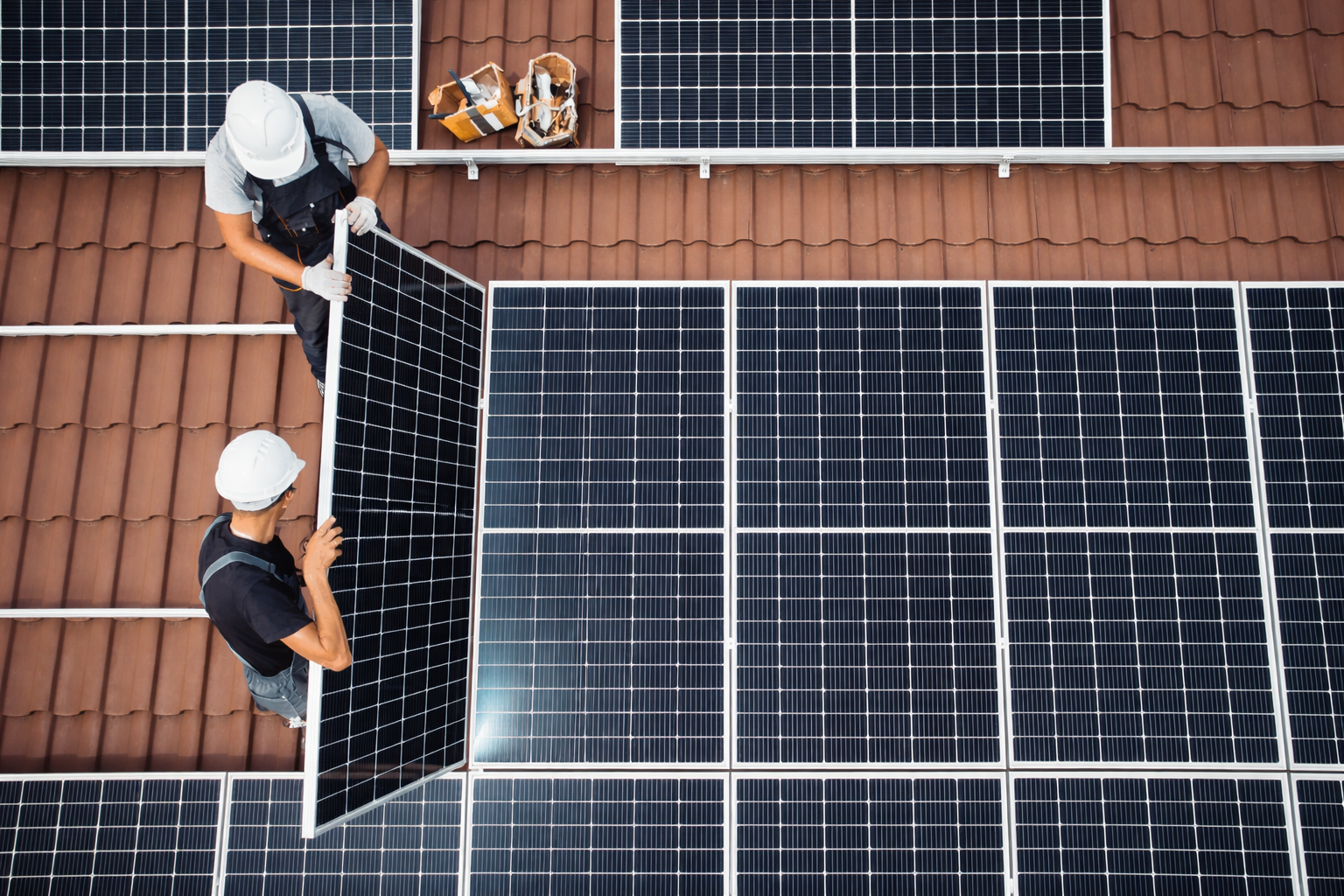
Two operators are placing a photovoltaic panel on a tiled roof

Existing photovoltaic system · House

Renovation and repowering of the home's photovoltaic system

Your system still has a lot to give.

A drop in production, an inverter that stops working or a house that consumes more energy than before: these are different needs that require different solutions. With photovoltaic revamping and repowering, we assess how to recover the operation of the existing system and when it makes sense to upgrade it or increase its power. We start from what you already have, from today’s consumption and from the available data.

Choose wisely

Restore, update or upgrade?

The revamping aims to recover functionality and reliability through targeted interventions: for example, replacing a failed inverter, resolving connection problems, or renewing deteriorated components. Repowering aims to increase the power of the system when space, technical conditions, and procedures allow it. A project can include both activities.

Regular maintenance remains a separate process: it serves to check and maintain the system. The choice between repair, upgrade, and expansion depends on the diagnosis, not only on the age of the panels.

What intervention is needed?What intervention is needed? Restoration: Resolve the identified problem. Update: Renew the parts that are no longer suitable. Expansion: Increase the power, if feasible CHECKS AND DECISIONSWhat intervention is needed?01RecoverySolving the identified problem02UpdateRenewing parts that are no longer suitable03ExpansionIncreasing the power, if feasible

Data before the decisions

Before the new components, a clear diagnosis

photovoltaic revamping

One month less productive does not, by itself, indicate that the system needs to be overhauled. Compare the historical data taking into account seasons, available irradiation, shadows, and periods of downtime. The alarms and measures help to understand whether the criticality concerns the system itself or only the transmission of data to the app.

The assessment considers modules, inverters, connections, protections, and coverage conditions. If information is missing, we define which controls are needed before formulating a proposal. The goal is to identify the problem and retain the components still suitable for the project.

Requirements and solutions

Three situations, three possible paths

01

The inverter stops working or does not communicate

We verify the nature of the anomaly and the possibility of restoration. If it needs to be replaced, we check its compatibility with existing panels and strings, as well as the characteristics of the electrical system. The only power indicated on the label is not enough to choose the replacement.

02

The house has changed

A heat pump, an electric car or new habits can change the demand. We assess any expansion by comparing consumption and production over different hours and seasons. More panels make sense when they meet a specific need and fit into a proven configuration.

03

You would like to use more energy in the evening

If the system is functioning properly, we can consider integrating a storage system. The battery moves the available energy over time: it does not increase the production of the panels. Architecture, compatibility, and useful capacity must be chosen based on the profile of the home. Power during a blackout requires a specific configuration.

The project as a whole

Different components must work together

More powerful panels can have different sizes, currents, and voltages. An expansion therefore requires verification of the inverter’s inputs, strings, cables, protections, and mounting hardware. The usable surface area and the condition of the roof are also part of the decision.

We help you compare the alternatives: a targeted intervention, a broader update, or a new portion of the plant. Costs, work, and expected benefits must be readable, with explicit assumptions and no equal savings percentages for everyone.

Before adding modulesBefore adding modules. Space and coverage: Surface, shading, and fixtures. Electrical part: Wiring, inverters, and connections. Home consumption: Schedules and needs in different seasons. Configuration and practices: Connection and active conventions CHECKS AND DECISIONSBefore adding modules01Space and coverageSurface, shadows and fixings02Electrical partStrings, inverters and connections03Household consumptionTimetables and needs in the seasons04Configuration and practicesConnected and active agreements

Configuration and compliance

The practices are evaluated before the work begins

We reconstruct authorized configurations, connection documents, and active agreements. For installations incentivized under Conto Energia, changes follow specific rules; the requirements change depending on the intervention. Even an increase in power may require updates to the distributor and other relevant parties.

Defining these steps before choosing the components allows the technical solution to be coordinated with the administrative situation of the plant.

A comprehensible path

Why tackle it with uSolar

We relate the system, the roof, and the family’s habits. From the initial analysis, we define the activities to be carried out, the components to be maintained and those to be updated, with a comprehensible scope of work. At the end, the operational checks and documentation of the intervention allow us to have an updated overview of the system.

Frequently asked questions

Not necessarily. The replacement depends on the detected conditions and the compatibility of the proposed solution. A localized failure may require a limited intervention.

In some cases it is possible, but electrical limits, sizing and authorized configuration must be verified. Adding modules is not a modification to be evaluated solely based on the nominal kW.

Yes, subject to applicable conditions. Before the work begins, it is necessary to verify the effect of the intervention on the existing regime and identify the communications or updates that are necessary.

Year of installation, power, inverter and panel models, recent bills, production history, and a description of any anomalies. If available, an electrical schematic and documentation of the procedures are also useful.

Let's start from here

We start from your system

Tell us what you want to solve or what new needs your home has. We will evaluate the most coherent path with the existing system.

×