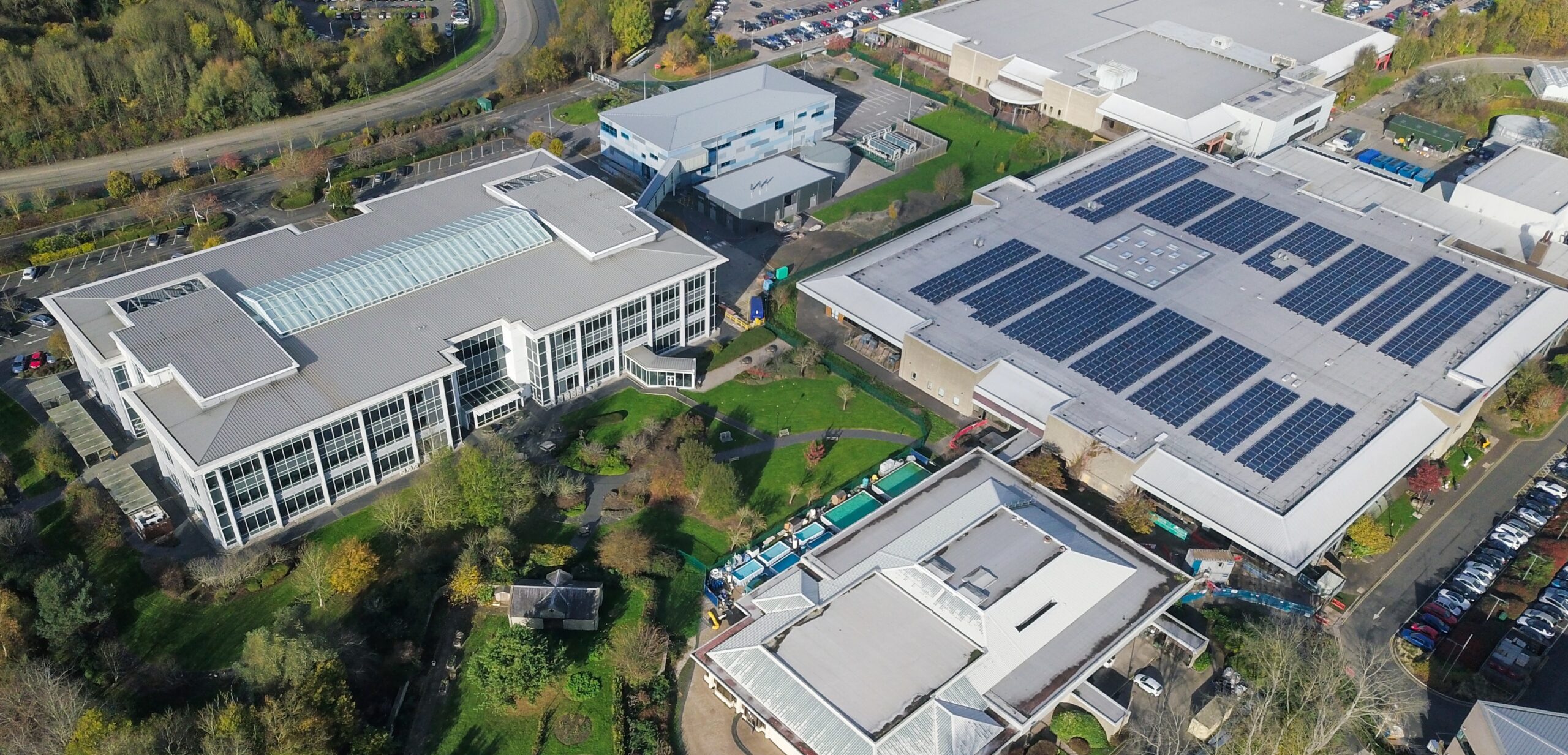
An industrial plant requires attention to data, components, and work organization. Maintenance of photovoltaic systems serves to identify anomalies, verify operational conditions, and plan activities with a technical approach.
uSolar assesses interventions on existing systems, from module cleaning to inverter and protection controls. We define the scope based on the configuration, the critical issues observed, and the accessibility of the site, coordinating the activities agreed upon with the company’s needs.
Total production is a starting point. To interpret it, the observed period, environmental conditions, the configuration of the plant, and the reliability of the available measurements are necessary.
Comparing inverters or equivalent sections can help identify a discrepancy that needs to be investigated. However, installed power, orientations, shadows, any limitations, and the availability of data must be considered. A difference does not automatically identify a defective component.
Alerts should also be read in context: frequency, duration, and impact help distinguish an isolated event from a recurring condition. Monitoring communications prevents confusion between a data interruption and a real shutdown.
Check
Different activities, a defined perimeter
01
Monitoring and analysis
Examination of the available data and events to guide the verification process. Any ongoing service requires a dedicated agreement regarding platforms, responsibilities, and the management of reports.
02
Inspections and controls
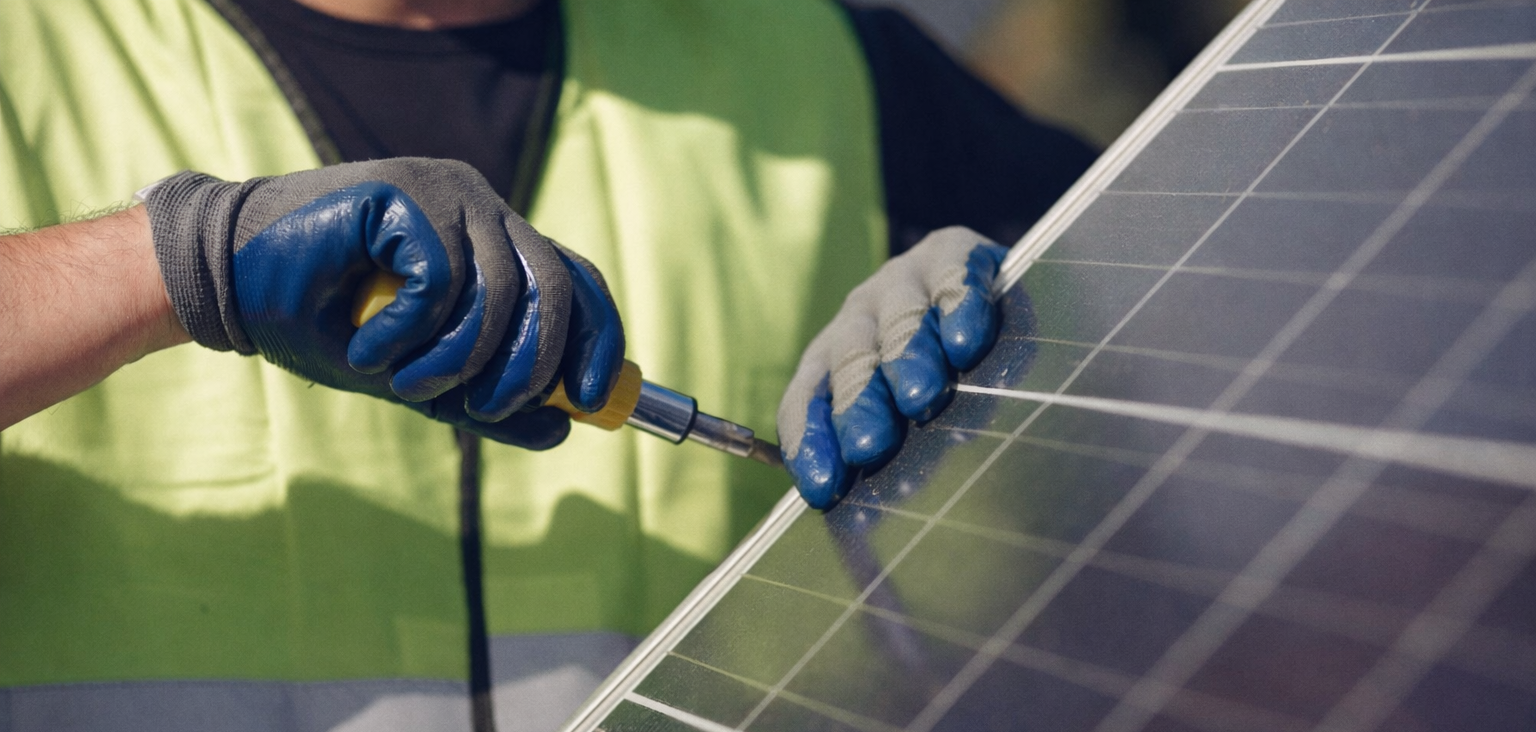
Assessment of the conditions of modules, structures, accessible wiring, inverters, panels and protections, with measurements and tests consistent with the system and the objective of the intervention.
03
Thermography, when appropriate
It can help to locate thermal anomalies. Irradiation, wind and operating conditions affect the reading: the results should be interpreted and, when necessary, verified with further checks.
04
Cleaning and corrective interventions
Cleaning tackles dirt; repair tackles a detected defect. Replacements, replacements, and further investigations are determined based on the outcome of the diagnosis.
Intervene with discretion
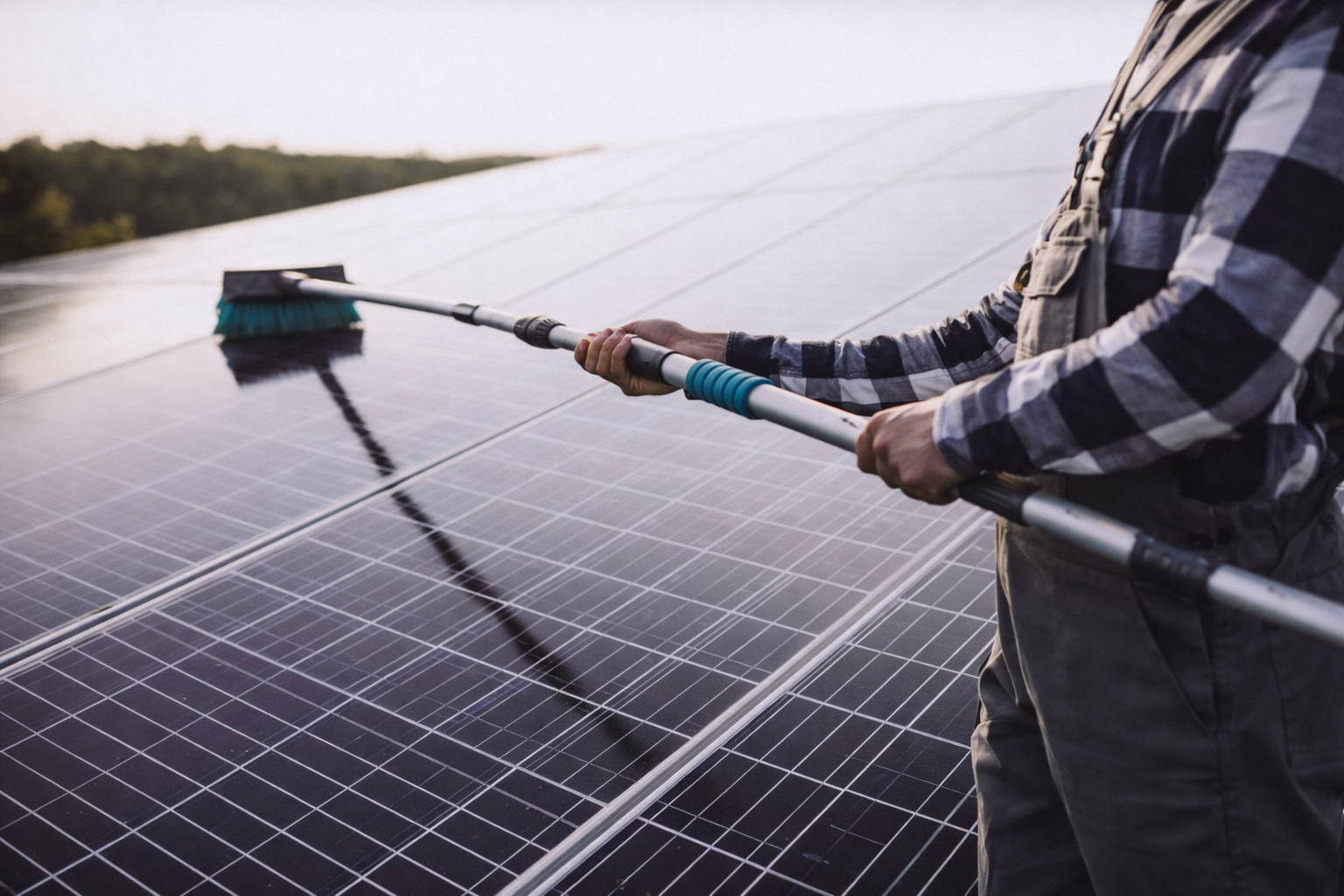
Cleaning starts with the conditions of the site
Dusts, residues from processing, vegetation and localized deposits may require different approaches. We assess dirt distribution, accessibility, module characteristics and manufacturer instructions before organizing the work.
Greater surface area does not alone justify a standard washing schedule. The program must take into account the environment and available evidence. The result of a cleaning should also be read in light of the measurement conditions: a sunnier day does not, by itself, demonstrate how much energy has been recovered.
A case to be understood
An example: two sections, a different trend
In a verification scenario, two sections with comparable characteristics show a trend that begins to diverge. First, completeness and consistency of the data are checked, then shadows, alarms, limitations, or different local conditions are sought.
If the discrepancy remains unexplained, on-site verifications are considered most useful. The sequence is simple: observation, comparison, diagnosis, intervention. The scenario describes a method of analysis, not a performance measured on a client or a diagnosis already concluded.
The uSolar method
The work, from analysis to final verification
01
Gathering the initial picture
Documentation, power, installed devices, available history and previous activities. We agree on interlocutors, access and site constraints.
02
Defining controls and priorities
We identify the relevant checks and organizational requirements, including any stops necessary to work safely.
03
Carry out what was agreed upon
Activities, spare parts and further investigations are identified in the proposal. Any additional anomalies require a dedicated assessment.
04
Documenting and programming
We will review the results and the subsequent activities. The information collected helps to set up a plan tailored to the history and use of the system.
No. Targeted intervention and continuous service respond to different needs. Any monitoring should be defined based on accessible data, the frequency of analysis, responsibility, and the management methods for events; it is not automatically included in maintenance.
No. It highlights thermal behavior that requires interpretation. It does not replace relevant electrical measurements nor does it, by itself, allow for the certification of the functionality of each component.
It depends on the activity. Some checks require the plant to be in operation; other interventions require appropriate safety conditions and sections. The mode and necessity of stopping are evaluated and agreed upon before the work begins.
Maintenance involves maintaining or restoring operational conditions. A broader update, or an increase in power, requires a separate design evaluation, including compatibility and any necessary practices.
We organize the next step
Please provide us with the location, power, main components, and critical issues of the system. If available, add the history of events and references to the technical documentation. We will build the comparison based on concrete elements, without assuming that spare parts or performance that has not been agreed upon are included.
Contains information related to marketing campaigns of the user. This is shared with Google AdWords / Google Ads when the Google Ads and Google Analytics accounts are linked together.
90 days
__utma
ID used to identify users and sessions
2 years since last activity
__utmt
Used to monitor the number of Google Analytics server requests
10 minutes
__utmb
Used to distinguish new sessions and visits. This cookie is set when the GA.js JavaScript library is loaded and there is no existing __utmb cookie. The cookie is updated every time data is sent to the Google Analytics server.
30 minutes after last activity
__utmc
Used only with old Urchin versions of Google Analytics and not with GA.js. Was used to distinguish between new sessions and visits at the end of a session.
End of session (browser)
__utmz
Contains information about the traffic source or campaign that directed a user to the website. The cookie is set when the GA.js JavaScript is loaded and updated when data is sent to the Google Analytics server.
6 months since last activity
__utmv
Contains custom information set by the website developer via the _setCustomVar method in Google Analytics. This cookie is updated every time new data is sent to the Google Analytics server.
2 years since last activity
__utmx
Used to determine whether a user is included in an A/B or Multivariate test.
18 months
_ga
Identification used to identify users
2 years
gale
Used by Google Analytics to determine which links on a page are being clicked
30 seconds
_ga_
Identification used to identify users
2 years
_gid
ID used to identify users for 24 hours following their last activity
24 hours
_gat
Used to monitor the number of Google Analytics server requests when using Google Tag Manager

 Italiano
 English (UK)
 Español
 Deutsch (Sie)
