
Technologies and components · Practical guide
Triangular photovoltaic panels: the project follows the roof
With TRienergia, the shape of the module also enters into the project. Here is when it can be useful on irregularly shaped roof faces and what checks are needed.
· uSolar
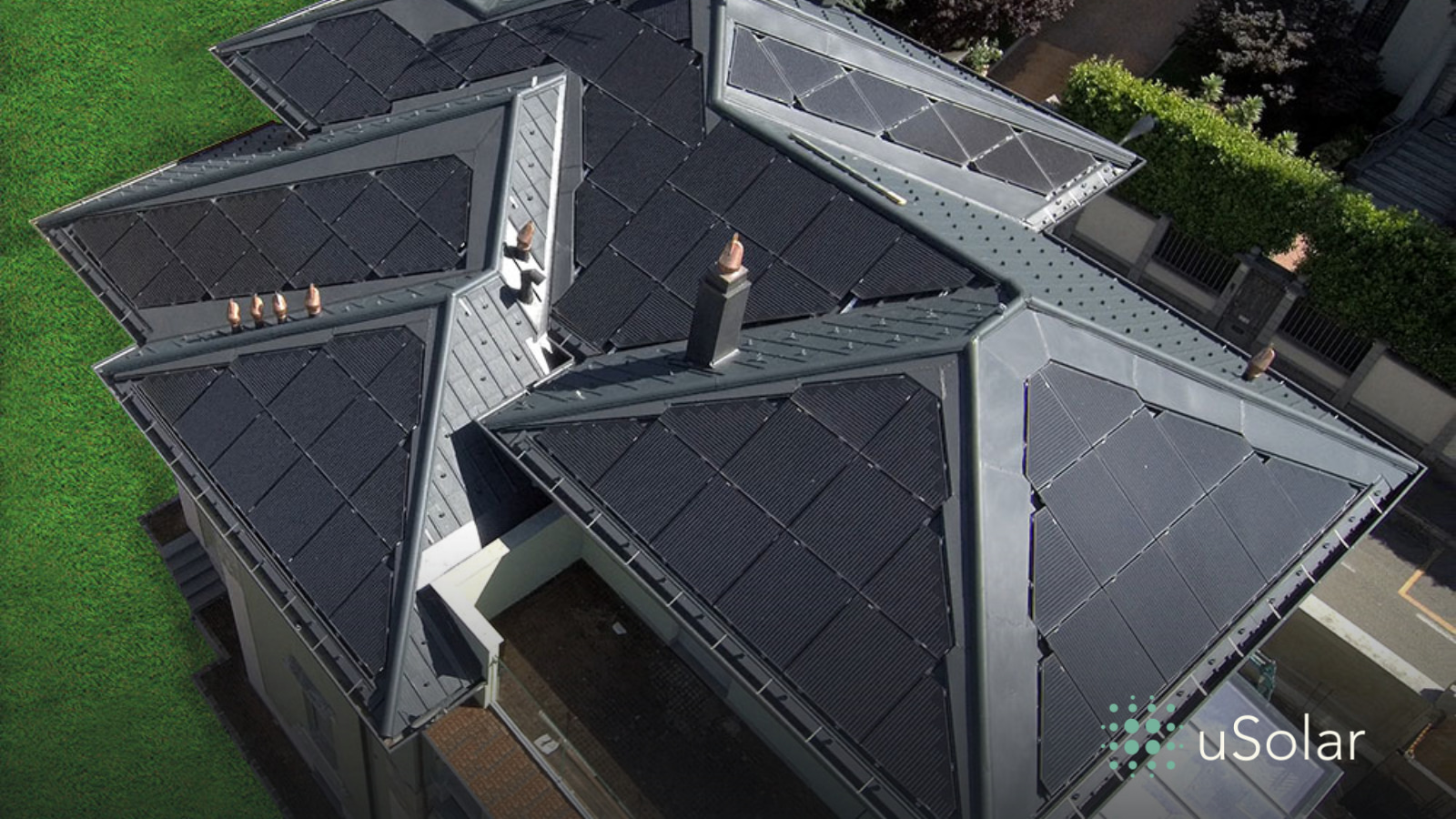
A hipped roof, a trapezoidal roof face, a sloping edge: the available surface rarely matches a perfect grid. When designing photovoltaics, some spaces remain outside the field of rectangular panels. The TRienergia triangular modules offer an additional possibility for composing the layout. Their value is measured on the complete roof, along with shadows, electrical connections, and the home’s energy consumption.
01 / The project
How the shape of the roof face affects the layout
Looking at a roof plan, the first impulse may be to look for the panel with the most watts. However, first it is worth observing the shape of the surface: roof ridges, hips, chimneys and windows define areas with different opportunities and constraints. A larger module may be difficult to place in a location where the edge of the roof slope narrows.
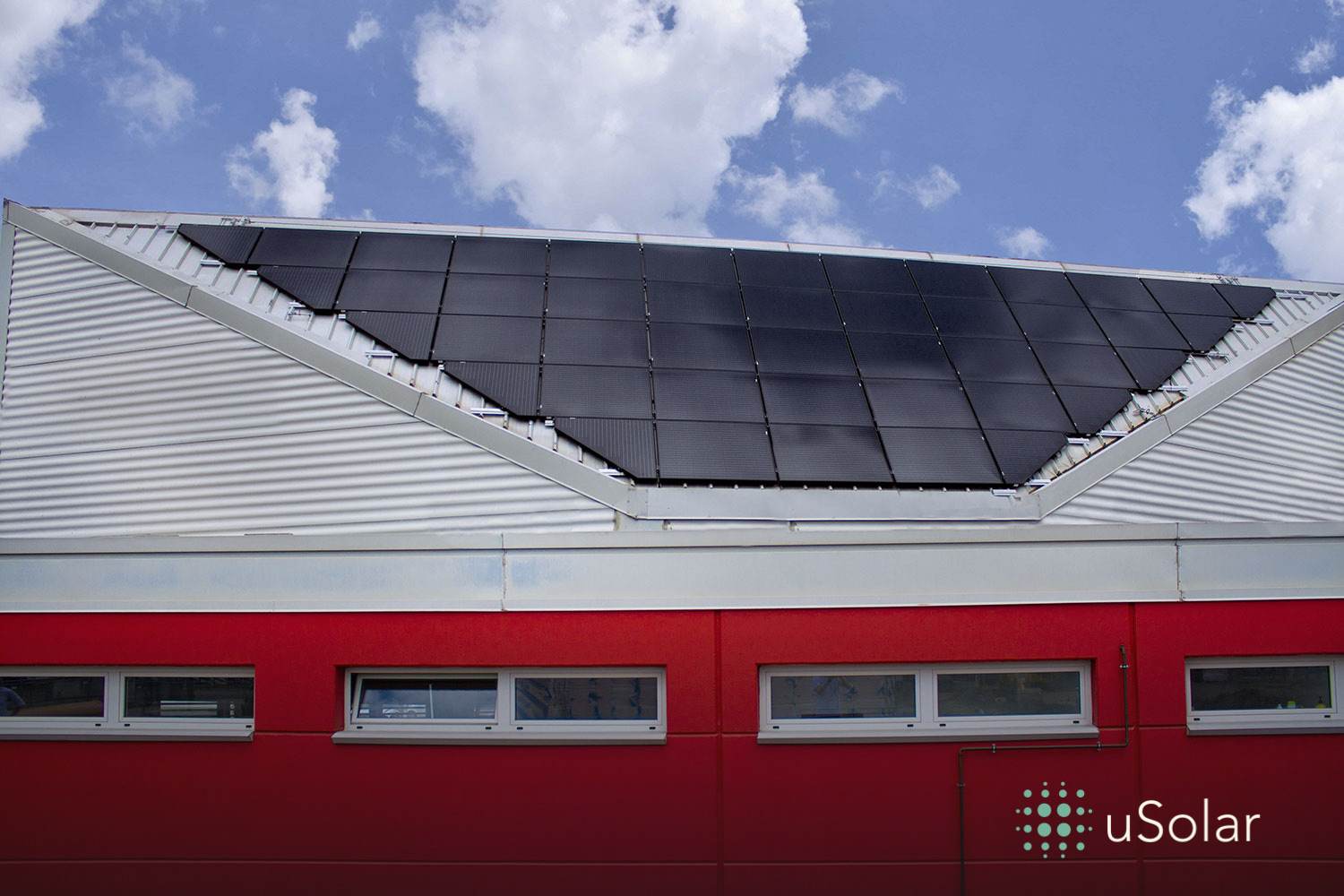
The TRienergia triangular family allows you to study compositions with modules of different formats. The manufacturer documents applications on triangular and trapezoidal roof faces. The useful question then becomes: which combination creates an ordered field that is installable and suitable for this house? Even leaving a part of the roof free can be a correct choice.
Sources: Technology and applications TRienergia · Manufacturer's manual
Geometry before numbers
Two layouts, the same roof face
Imagine a roof face with a sloping edge. In a first solution, the rectangular modules occupy the central part; in a second, some triangular modules follow compatible lateral portions. The graphical comparison helps to see how the arrangement changes, before assigning an energy result.
The field remains central
The inclined ends may leave some portions outside the composition.
The edge enters the drawing
Another format opens up possibilities along the edge, to be verified in the project.
The scheme on this page is an illustrative geometric comparison. It does not assign an annual production or a percentage increase: to do so, real dimensions, the building’s position, orientation, inclination, and analysis of shadows are required. The two layouts must also meet the same constraints and necessary spaces. The result must also be evaluated for accessibility, maintenance, and overall cost.
02 / The project
TRI125TP-BB: the data that help to recognize it
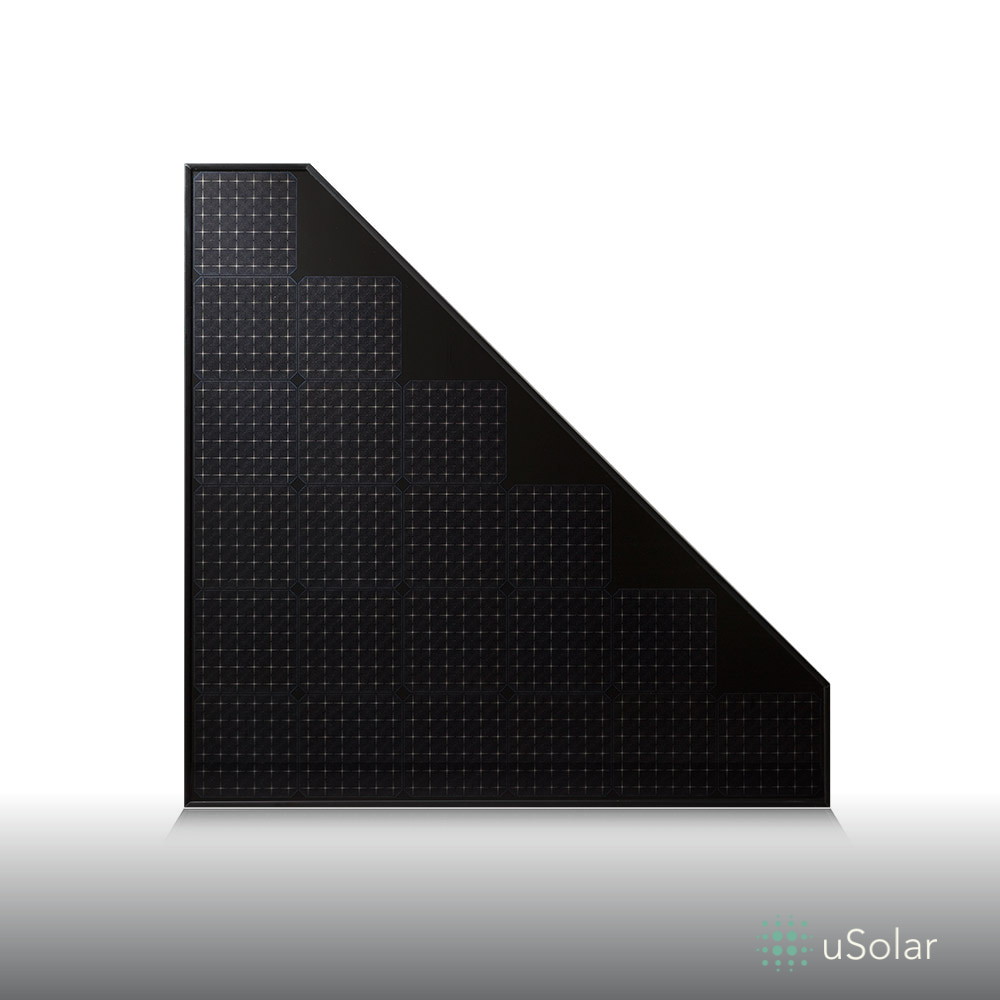
The datasheet for the TRIxxxTP-BB series identifies the model as TRI125TP-BB: 125 Wp, 21 MonoPERC MWT Backcontact cells and Full Black finish. The declared footprint is 1035 × 1035 mm, with a thickness of 30 mm and a weight of 7 kg. These are figures for the individual module, not the complete system.
MWT stands for Metal Wrap Through: the technology routes the electrical contacts to the back of the cells, connected through a conductive backsheet. For this article, the focus remains on the field composition: the shape, dimensions, and electrical characteristics must be considered together.
Sources: Technical sheet TRienergia · Technology and applications TRienergia
The single module
A different form.
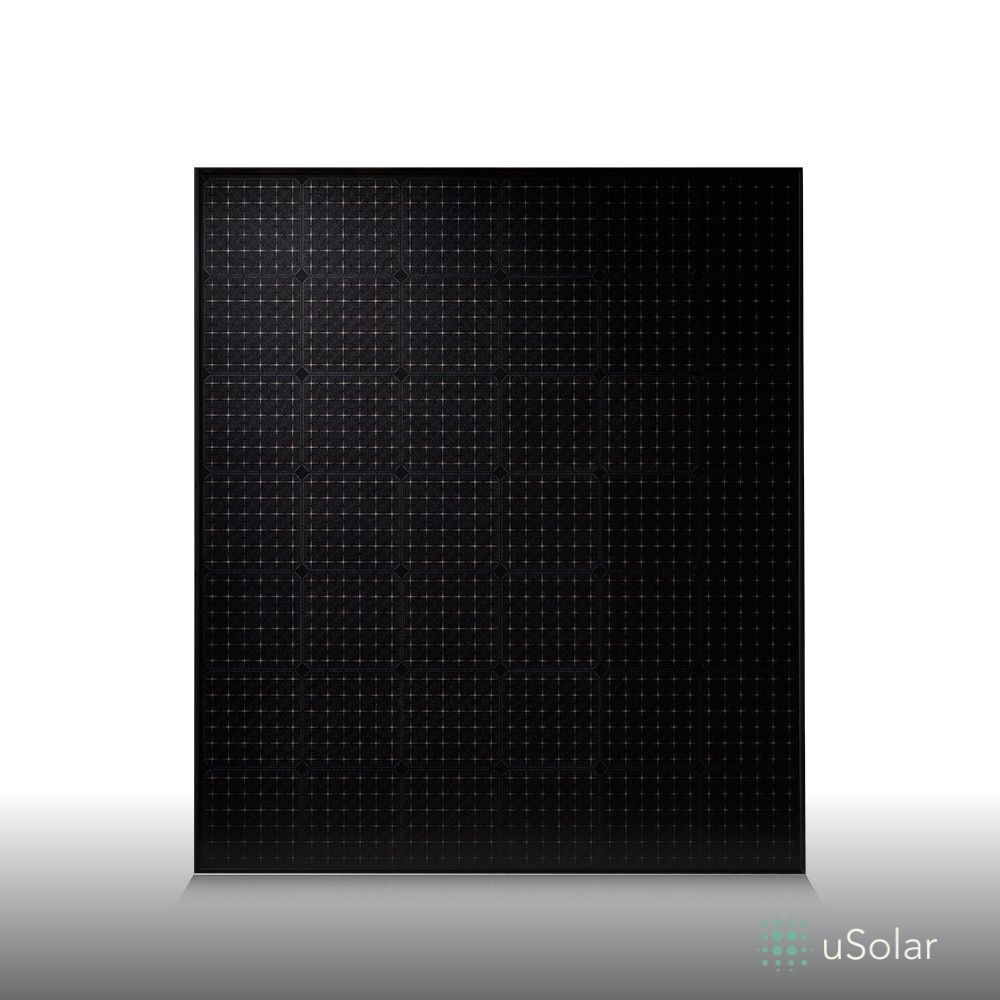
Precise data.
Reading the data helps identify the component. The system is based on verifying its configuration.
| Rated power | 125 Wp |
|---|---|
| Cells and technology | 21 cells — MonoPERC MWT Backcontact |
| Declared size | 1035 × 1035 × 30 mm |
| Weight of the module | 7 kg |
| Finish | Full Black |
| Voltage at maximum power (Vmp) | 11.90 V |
| Current at maximum power (Imp) | 10.65 A |
| Voltage in open circuit (Voc) | 14.46 V |
| Short-circuit current (ISC) | 11.18 A |
Source: Technical data sheet TRienergia TRIxxxTP-BB, revision 04/2025, Connected from the manufacturer’s Download area to the November 3, 2026 verification. Data for the model TRI125TP-BB. For configuration, installation, and ordering, the applicable documentation and project verification apply.
03 / The project
From the composition to the electrical design
Placing two forms in the design is just a step. The TRienergia manual shows combinations of the 42-cell module with the 21-cell module and requires verification of the electrical compatibility of the modules belonging to the same string or to the same independent input of the inverter.
Therefore, it is necessary to define the exact models and check the voltages, currents, and limits of the inverter in the intended configuration. Even an expansion requires this verification: adding a triangle to an existing system is not a decision to be made based solely on available space. Component compatibility comes before purchase.
Sources: Manufacturer's manual
The place on the roof
The outline of the roof face, obstacles, shadows and areas to be left accessible.
The electric combination
Exact models, currents and voltages in the intended configuration.
The complete system
Inputs, limits, and compatibility checked before choosing the components.
04 / The project
The usable space must remain an accessible ceiling.
The verification also concerns cover, supports and maintenance. The manufacturer's manual requires an adequate structure, fixing points in the designated locations and respect for the spaces between the modules. Wind, snow, ventilation and obstacles are part of the project.
For the owner, this translates into concrete questions: how do you reach the fireplace? Which areas must remain free? Where do cables and supports run? What would change if the roof was maintained? A convincing layout also answers these questions and does not simply fill in a shape.
Sources: Manufacturer's manual
05 / The project
What to ask in the comparison between the solutions
Ask for two readable proposals regarding the same area: what modules are used, how they are distributed, what overall power is obtained, and on what assumptions the estimated production is based. Then link that production to the household’s consumption and the times when energy is needed.
If a mixed composition allows the use of a previously excluded portion, the benefit must be weighed against the additional cost and complexity. Triangular panels can expand the design options; the best choice comes from a thorough comparison. At uSolar, we start with the roof and the needs of the home to build a coherent solution.
Sources: The uSolar service for the roof
Two proposals on the same subject.
Estimates with comparable assumptions.
Useful energy during the hours of the day when the house is occupied.
Components, installation and complexity.
Questions before choosing
Does a triangular panel produce more than a rectangular one?
The form alone does not determine production. The useful comparison concerns the array that fits on the same roof face and its estimated production, using the same assumptions.
Can I combine it with the panels I already have?
It is necessary to verify the existing models, the electrical characteristics, the inverter and the mounting hardware. The possibility of physically placing it does not demonstrate the compatibility of the connection.
Can it be installed in every free corner of the roof?
No. Shadows, obstacles, access points, and installation constraints may make it advisable to leave certain areas free.
Sources and documentation
TRienergia TRIxxxTP-BB — technical sheet 04/2025
TRIxxxSP/DP/TP/VP/HP manual assembly, use and maintenance — Rev. 4 of 01/09/2023
TRienergia — MWT Backcontact Technology
Photographs and product images: TRienergia. The photos of the covers document applications by the manufacturer; the table data refer to the model TRI125TP-BB. Source verification: November 3, 2026.

 Italiano
 English (UK)
 Español
 Deutsch (Sie)
