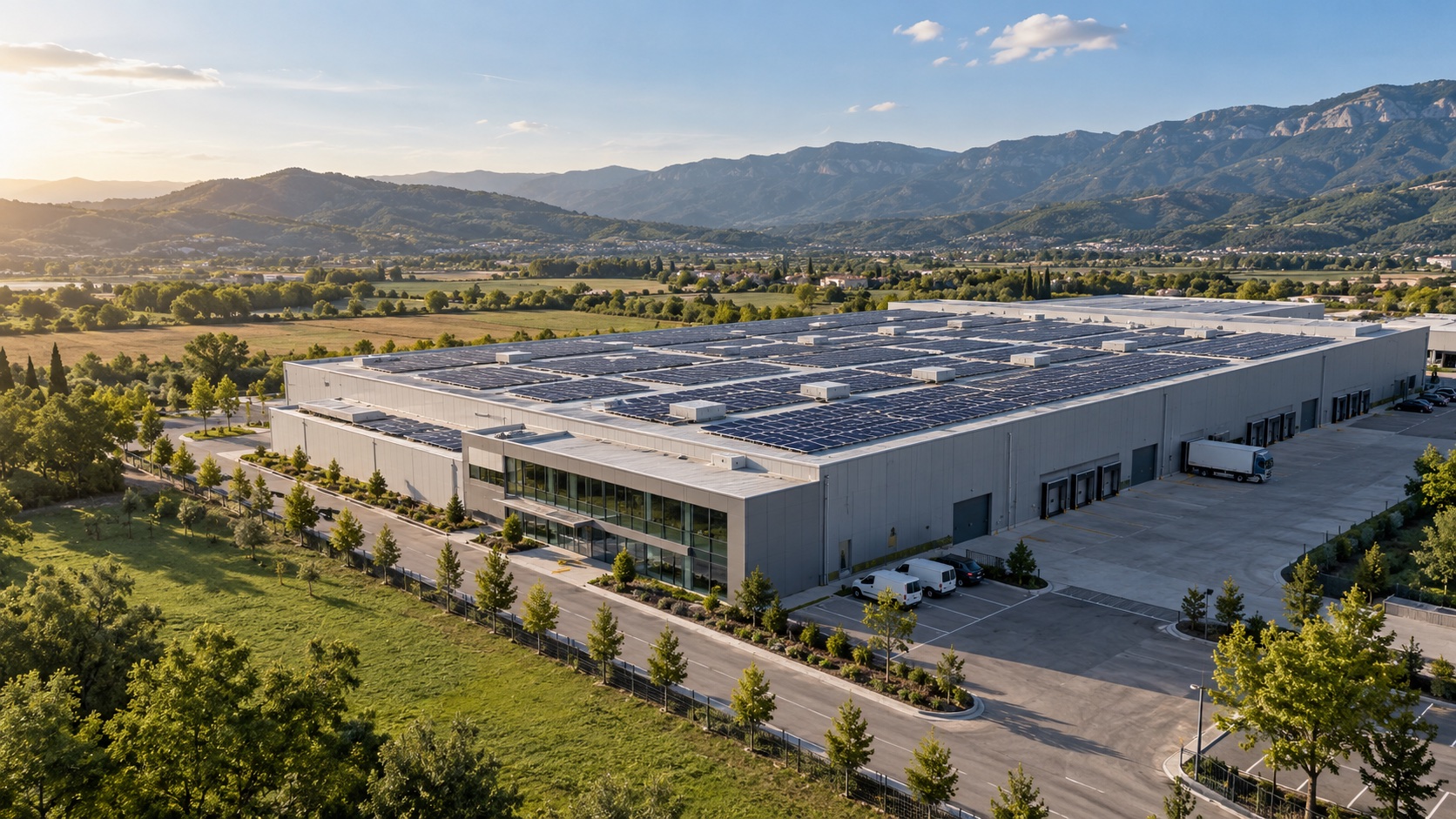
Industrial plant with photovoltaic modules installed on the roof

Existing photovoltaic systems · Companies

Renewable photovoltaic systems for companies

Put the value of your system back at the center.

Lower than expected production, recurring failures, difficult-to-find components, or changing business needs: an existing plant requires data-driven decisions. With photovoltaic revamping and repowering, we analyze the critical issues and design interventions to recover functionality, update the system, or increase power output. Each choice also considers coverage, connectivity, and work organization.

Choose wisely

Recovering performance and planning evolution

The revamping intervenes on the existing system to restore or improve functionality and reliability. It can involve inverters, modules, connections, protections, and control instruments. Repowering aims to increase the installed power through a project that verifies technical feasibility and compliance.

The two activities can coexist, but they must be compared with a third option: maintaining the plant and resolving limited critical issues. Scheduled maintenance supports operation over time; a redevelopment project, on the other hand, modifies specific parts or the overall configuration.

Recover or enhance?Recover or enhance? Distinct objectives. ('REVAMPING', 'Recovered functionality'). ('REPOWERING', 'Additional power'). Technical and administrative review of the case. READING THE SYSTEMRecover or enhance?Distinct objectivesREVAMPINGFunctionalityrecoveredREPOWERINGAdditional powerTechnical and administrative review of the case.

Data before the decisions

Production must be read in its context

photovoltaic revamping

We start with production data, alarms, inverter availability, and a history of interventions. To interpret a deviation, we consider glare, temperature when available, shadows, stops, and limitations. A comparison between two annual totals alone does not identify the cause of a drop.

We complement this reading with the consumption curves of the activity: shifts, weekends, seasonality and new workloads. In this way, we distinguish the energy to be recovered for anomalies from that which could potentially be produced through an expansion, and assess how much of it can be used on-site.

Requirements and solutions

Three concrete needs of businesses

01

Repeated stops and obsolete components

We assess the restoration and replacement of critical components, considering compatibility, accessibility, and availability of spare parts. The intervention may involve a portion of the system or require a broader revision of the electrical architecture.

02

New lines, new shifts, new energy demand

An increase in consumption makes it useful to verify the potential of the available surfaces. The repowering project compares additional power, self-consumption profile, connection limitations, and necessary works. The energy produced in excess does not automatically correspond to an equal reduction in consumption.

03

A cover to be renovated

When the roof requires work, we coordinate the evaluation of photovoltaic systems with that of the roofing. Components removal and repositioning, fixing, electrical wiring, access routes, and construction phases must all be considered. Any stops must be factored into the planning from the very beginning.

The project as a whole

A coherent electrical project, from the module to the network

The insertion of new modules or inverters requires checks on voltages, currents, string configuration and available inputs. The verification extends to cables, panels, protections, measurement and connection system, according to the scope of the intervention.

A BESS storage system can be evaluated alongside photovoltaic systems when there is a specific objective, such as shifting energy between time slots or managing certain peaks. Capacity, power, and control must be sized based on the activity data. The backup function requires a dedicated architecture and the identification of the loads to be powered.

A system checkA system check. Wiring and modules: Conditions, dimensions and mounting. Strings and inverters: Voltage and current compatibility. Panels and measurement: Cables, protections and billing. Network and management: Connection limits and control CHECKS AND DECISIONSA system check01Covering and modulesConditions, dimensions and mounting02Strings and invertersCompatibility of voltages and currents03Paintings and measurementCables, protections and billing04Network and managementConnection limits and control

Configuration and compliance

Practices and conventions are part of feasibility

Before starting the works, we reconstruct the configuration of the system, the available practices, and any incentive scheme. The rules of the Energy Account distinguish different types of intervention; replacements, accumulation, and upgrades do not automatically require the same requirements.

The proposal must clarify the necessary updates with GSE, the distributor, and other relevant parties, as the case may be. Any increase in power must be coordinated with the connection and the proper management of the plant sections and measures.

A comprehensible path

The uSolar method

We organize the process in four steps: data collection, critical issues assessment, comparison of alternatives, and planning of the intervention. We define what to keep, what to replace, which verifications to perform, and what documentation activities are planned.

The economic comparison distinguishes investment, operating costs, and expected benefits, specifying the assumptions. The final verification considers the functioning of the stakeholders; the subsequent monitoring allows reading the results in relation to comparable conditions. Timelines and possible interferences are evaluated together with the site’s operationality.

Frequently asked questions

No. It can involve an expansion or a part of the system. The choice depends on the condition of the components, compatibility, space, connection, and company objectives.

The phases are planned taking into account production and logistics. Some operations require stops or limitations: duration and methods must be defined in the project, without assuming absolute continuity.

The assessment depends on the scheme and the planned modification. It is necessary to verify the applicable conditions before taking action, also distinguishing the possible new portion that is not incentivized.

Schemes, models and installed capacities, historical production, load curves, alarms, performed maintenance and connection and incentive documents. Future production changes also help to define the project.

Let's start from here

We give direction to your system

Let’s start with the company’s critical issues and objectives to build a motivated, verifiable, and compatible intervention with the site.

×