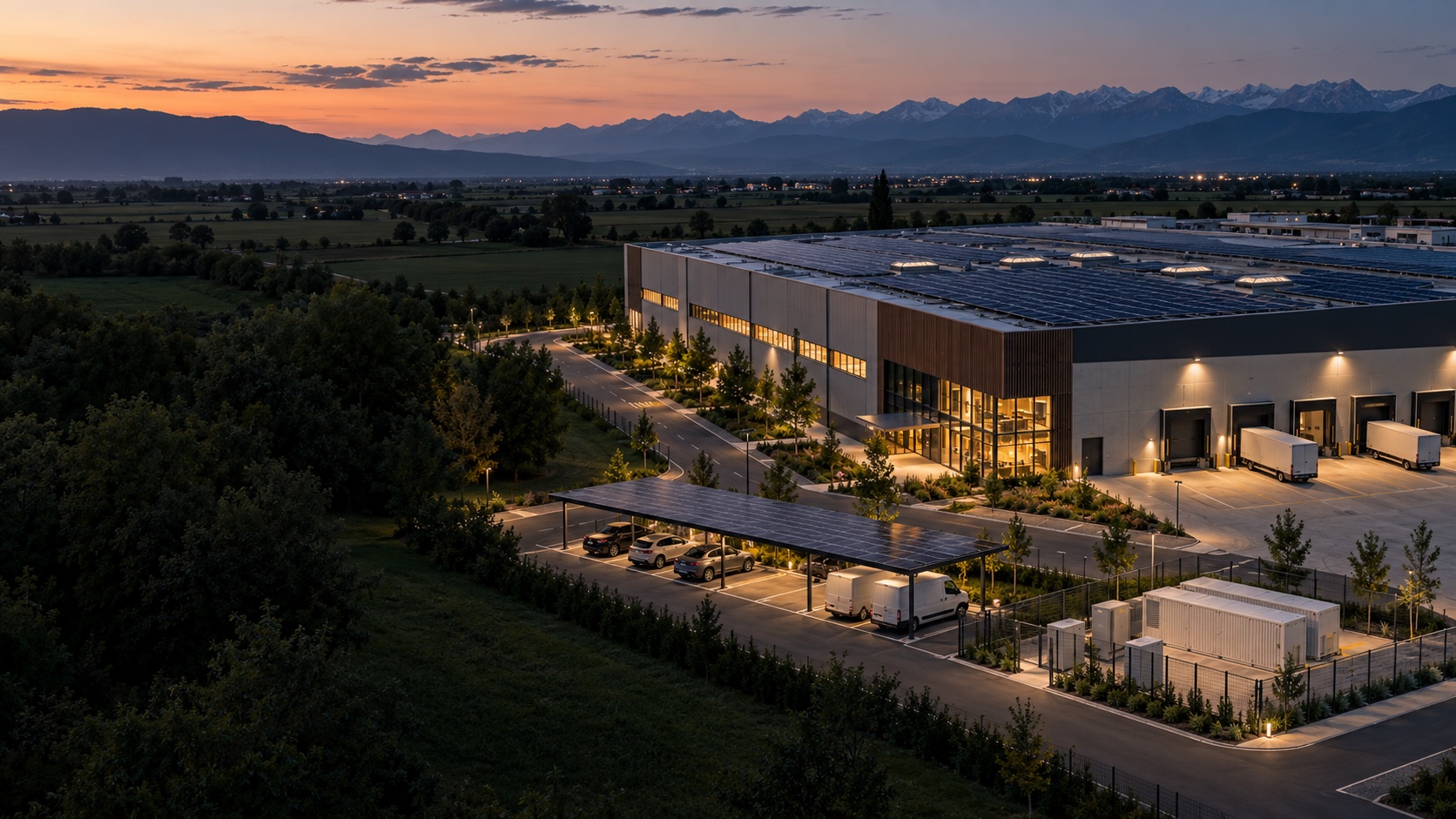
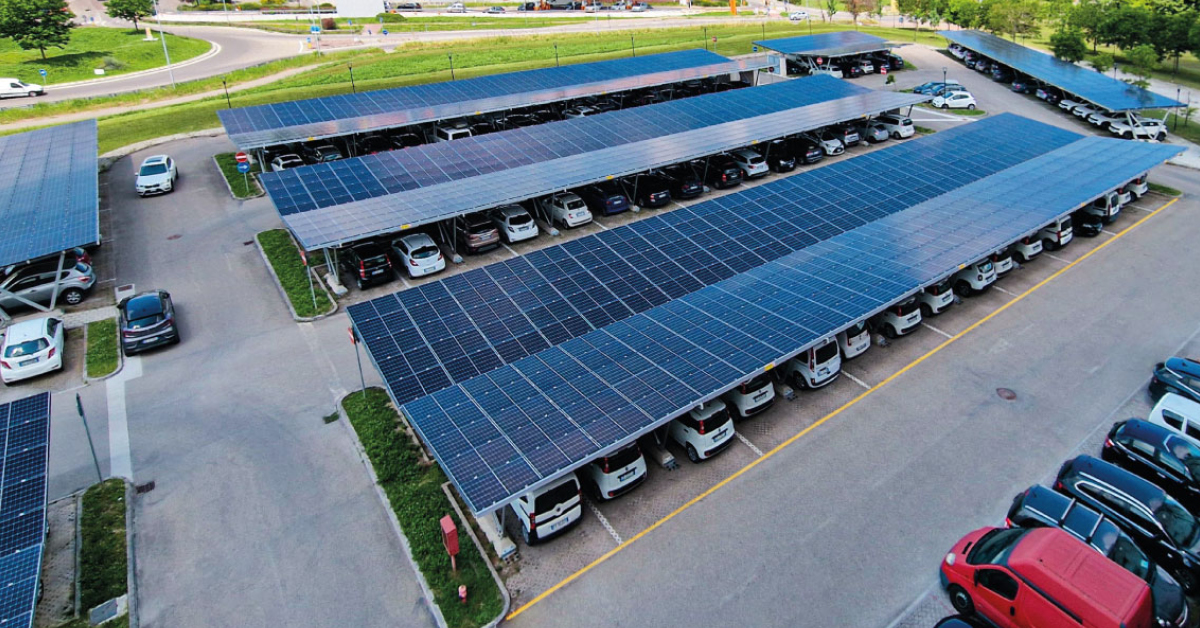
Industrial site with photovoltaic panels on the roof, carport, BESS storage system and electric charging

Photovoltaic for companies

Your company.
A smarter energy.

Photovoltaic energy, storage and charging. A project that connects the energy you produce with the work you do.

01 / THE SUN

Producing.

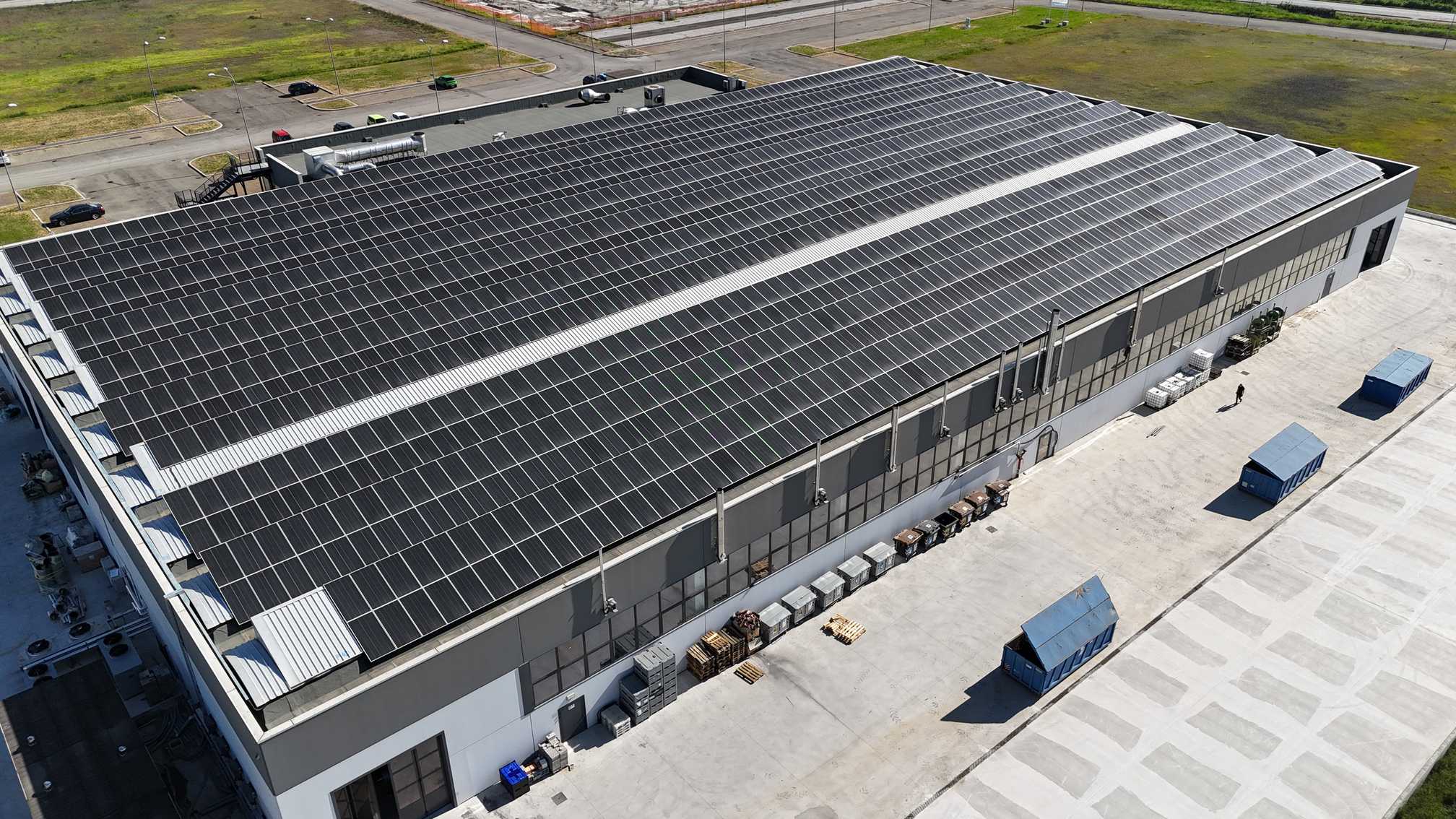
Valuing roofs, land and parking spaces with photovoltaic systems.

02 / TIME

Accumulate.

Transferring part of the energy to subsequent consumption.

03 / MOBILITY

Recharge.

Providing energy to vehicles according to the rhythm of activity.

04 / THE PRIORITIES

Manage.

Measure flows and coordinate compatible systems.

THE COMPLETE SYSTEM

The energy is moving.
The project is coordinated by her.

Photovoltaic energy for companies starts with actual consumption. uSolar designs and builds systems that combine surface area, demand, and electrical infrastructure. Production, storage, and charging are included in the project according to the needs of the site.

HOW THE SOLUTIONS WERE CONNECTED

One system. More possibilities.

Photovoltaic

Production from the sun

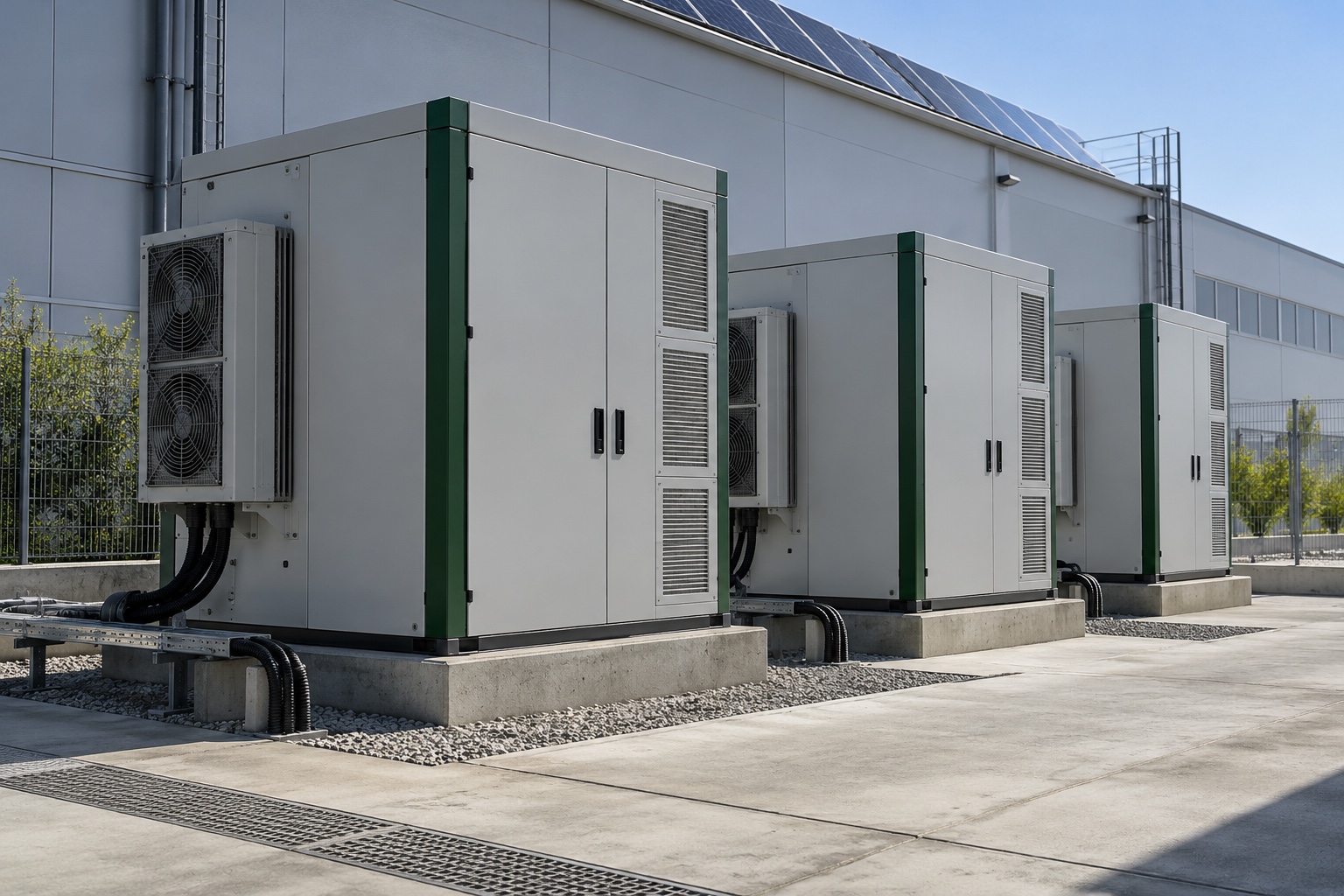
BESS

Charging and discharging

Network

Energy exchange

Charging

Energy for vehicles

The energy of the companyFunctional scheme: photovoltaic production directly powers loads; part of the excess can charge the storage, which returns energy to the loads at a later time. It does not represent an operational electrical configuration. FUNCTIONAL FLOWSThe energy of the companyPhotovoltaicNetworkLoadsBESSDirect useif provided forFurther useConversion, protections and connectionsThey are defined in the project.

YOUR COMPANY

Processes, services, people.

Size + EMS

Data, thresholds and priorities for coordinating compatible devices.

ENERGY

Produce where it is needed.

The photovoltaic system supplies the site’s energy needs. The storage can store a portion of the excess; the grid completes the balance.

ELECTRONICS

Integrate well.

Inverters, converters, panels and protections are defined together, verifying the power and compatibility of the system.

DIGITAL

Deciding on the data.

The measures show what happens. Where required, the EMS manages charging, discharging and compatible loads according to priorities.

USOLAR SOLUTIONS

From a available surface
to an energy project.

Five solutions for corporate photovoltaics and its integration. We start from the concrete need, choosing the technologies that can meet it.

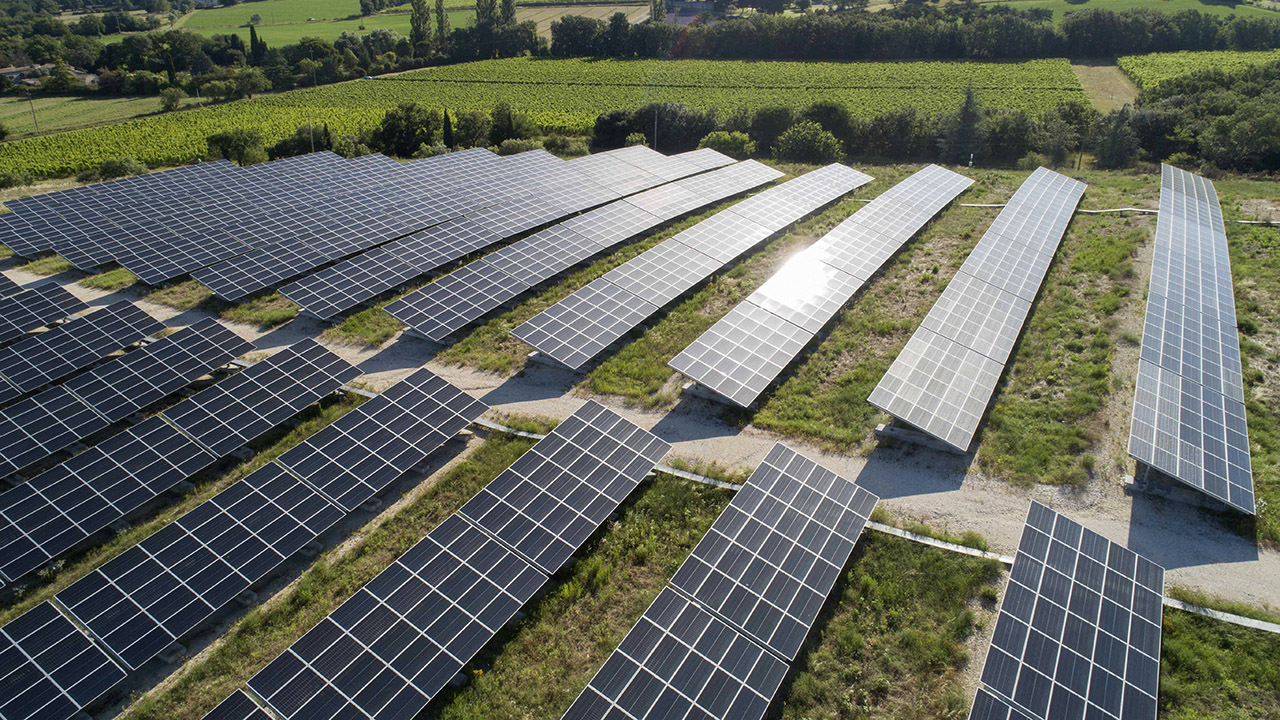
Photovoltaic modules installed on land

03 / SOLAR POWER ON THE GROUND

More value
to suitable areas.

A dedicated installation or integration with the roof. Exposure, terrain, access points, constraints and connection possibilities occur.

Photovoltaic pensilars covering a parking lot

04 / CARPORT PHOTOVOLTAIC

Parking
enters the project.

Vehicle coverage and production from the sun. Parking spaces, circulation, and the electrical system are studied together, including charging.

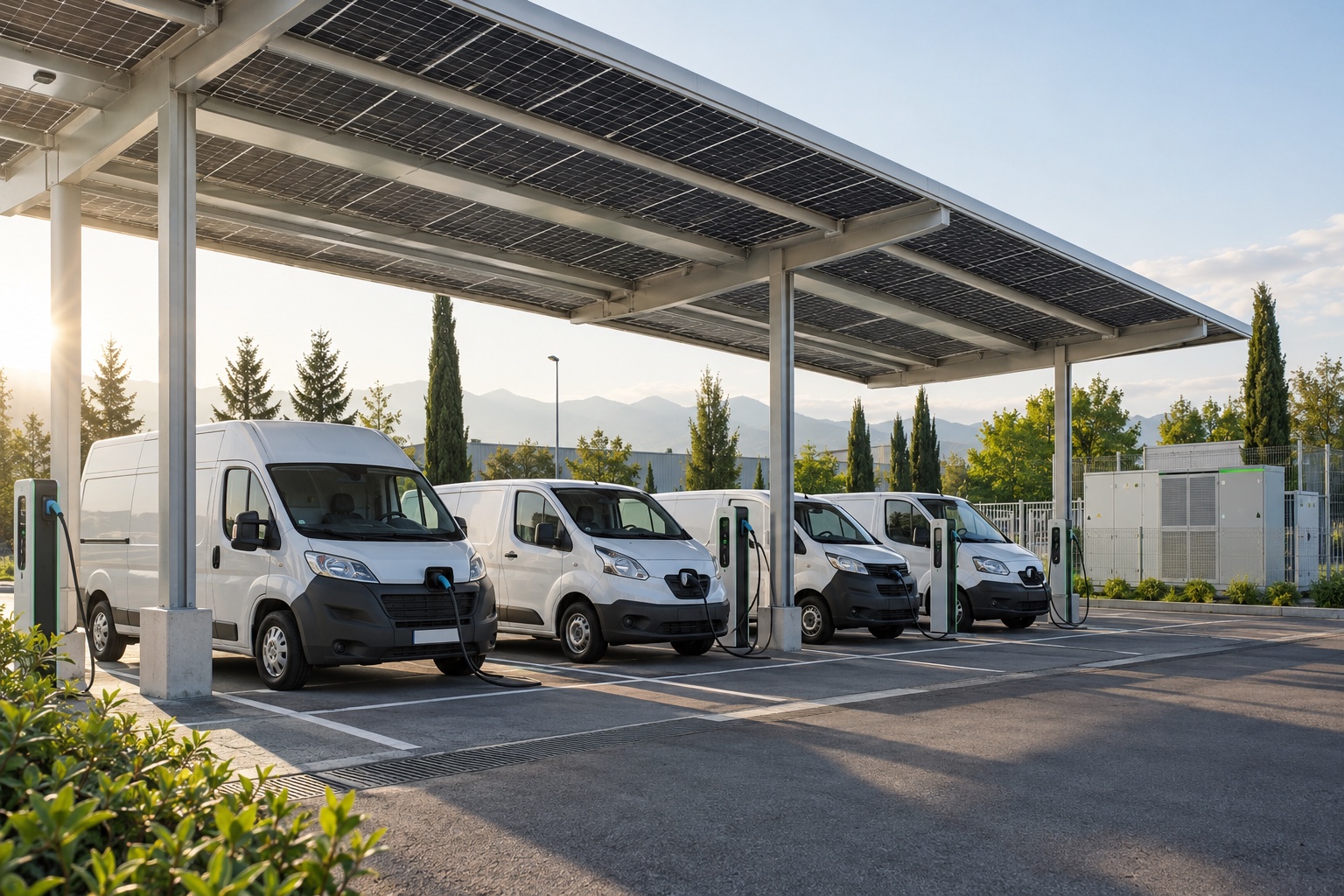
Fleet of electric vans recharging under a photovoltaic carport

05 / ELECTRICAL RECHARGE

Ready to start again.
With the right priorities.

Solutions for fleets, employees, and customers. Vehicles, waiting times, and available power guide the choice of charging points.

ONE DAY, DIFFERENT REQUIREMENTS

The energy follows
the rhythm of the company.

The value of integration emerges when production and demand change. The strategy defines when to use energy, when to conserve it, and what needs take priority.

WHEN THE SITE WORKS

Use the sun.

The available production can feed current consumption, reducing part of the extraction from the grid.

WHEN THERE IS EXCESS

Conserve energy.

The BESS can charge within its limits, preparing a reserve for subsequent needs.

WHEN THE DEMAND REMAINS LOW

Support the peaks.

Accumulated and manageable loads can help to contain the load, with appropriate power and load.

WHEN THE SHIFTS CHANGE

Prepare the follow-up.

Vehicle charging, evening consumption and backup reserves, if provided, require coordinated priority.

The functions share power and capabilities: the same energy cannot be allocated simultaneously to all objectives.

WHY USOLAR

The technical choices.
A reference
to face them.

An energy project affects the operation of the company. We make it readable, from the initial comparison to the planned activities after installation.

01

Customized analysis.

We study the consumption profile, available surfaces, technical constraints, and the company’s objectives. The project starts from your context.

02

Complete management.

One single contact point to coordinate design, installation, procedures, connection and the planned support.

03

Greater self-consumption.

We evaluate how to use a greater portion of the energy produced within the company, with consistent sizing and management.

04

Support over time.

Monitoring, scheduled maintenance and technical interventions. Activities, frequencies and conditions defined in the proposal.

THE PATH

First the data.
Then the choices.

From the initial need to a concrete proposal, with expected performance, operational conditions and tasks to be carried out.

01

Understanding.

Consumption, production, shifts, areas and future workloads. We read the website and its priorities.

02

Compare.

Technical and economic scenarios: usable energy, avoidable costs, investment, losses and management.

03

To realize.

Design, installation and related connection and GSE practices, with coordinated activities.

04

Check.

Testing, testing and documentation. Monitoring and maintenance according to the agreed program.

FREQUENTLY ASKED QUESTIONS

Clarity,
before the choice.

The answers from which to start. Configuration and results are always evaluated based on the actual characteristics of the system.

Do I have to install everything right away?

No. You can start from a specific need. Future integrations should be considered by verifying space, connection, and compatibility; expansion depends on the initial choices and products.

Can I integrate an existing system?

In many configurations, yes. To add accumulation or recharge, electrical circuits, inverters, measurements, protections, and connection conditions occur.

Does EMS automatically reduce costs?

Measurement and control help manage energy. The result depends on consumption, tariff, installation, and strategy, with compatible functions and verifiable goals.

What does peak shaving mean?

Using the accumulation to support part of the demand during times of greater demand. Power, duration and available charge define the intervention; the economic advantage depends on the supply.

With the batteries, can I work even in a blackout?

Only with a pre-configured configuration: island operation, separation from the network, protections and backup. Transfer times and priority loads must be verified; a dedicated UPS may be required.

What data is needed to get started?

Bills, consumption and production curves, electrical schematic and information about surfaces. To these we add shifts, new loads and the company’s objectives.

Do you already have a system?

The value of the plant.
Even in the years that followed.

A company’s equipment changes with the business. We distinguish between investments to upgrade it and the maintenance necessary to keep it operating properly.

Revamping and repowering

Diagnosis, component updates and evaluation of an increase in power. A project built on the real conditions of the plant.

Photovoltaic maintenance

Checks, data reading and targeted interventions. Cleaning when necessary and checks appropriate to the configuration and use.

WE START FROM YOUR COMPANY

The next step?
Putting the data together.

Production, peaks, charging or continuity: tell us how your company works and what needs you want to address.

Consumption · area · shifts · priority

×